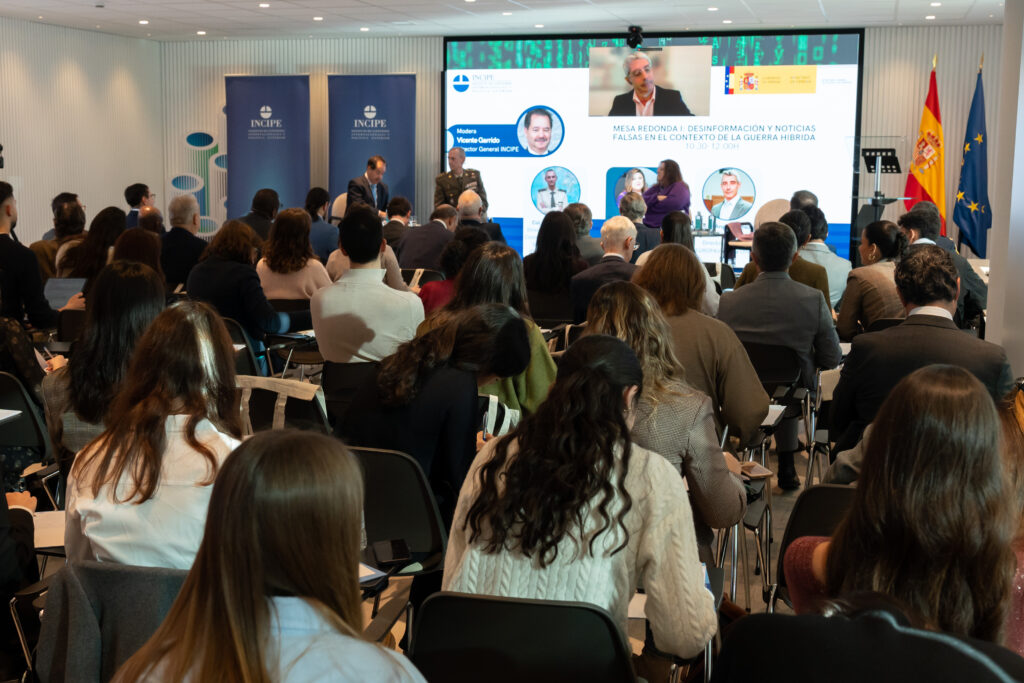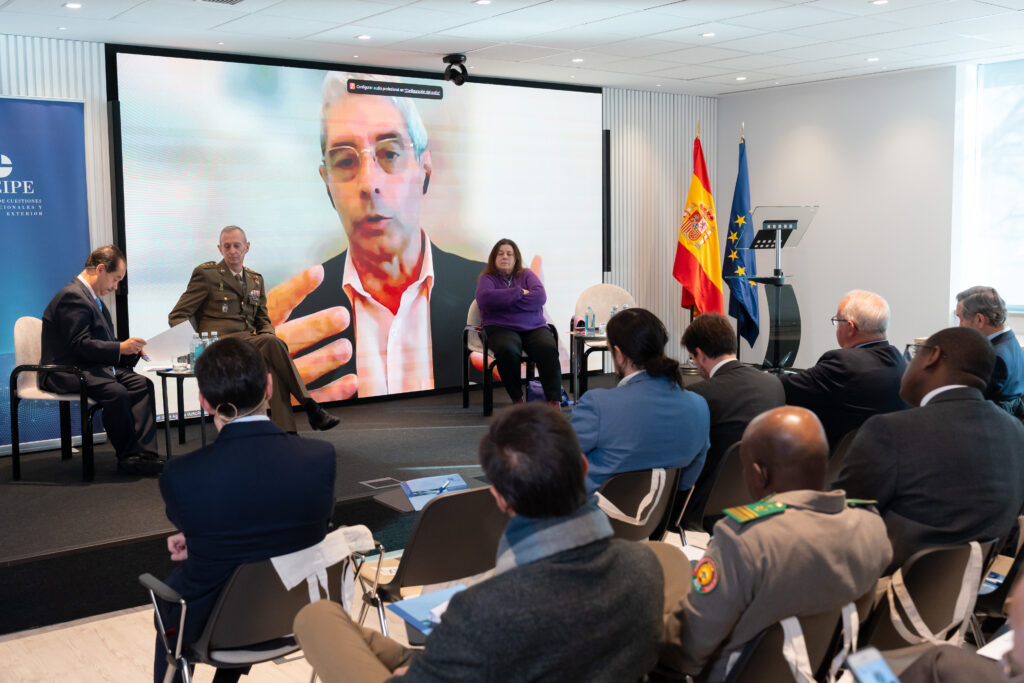
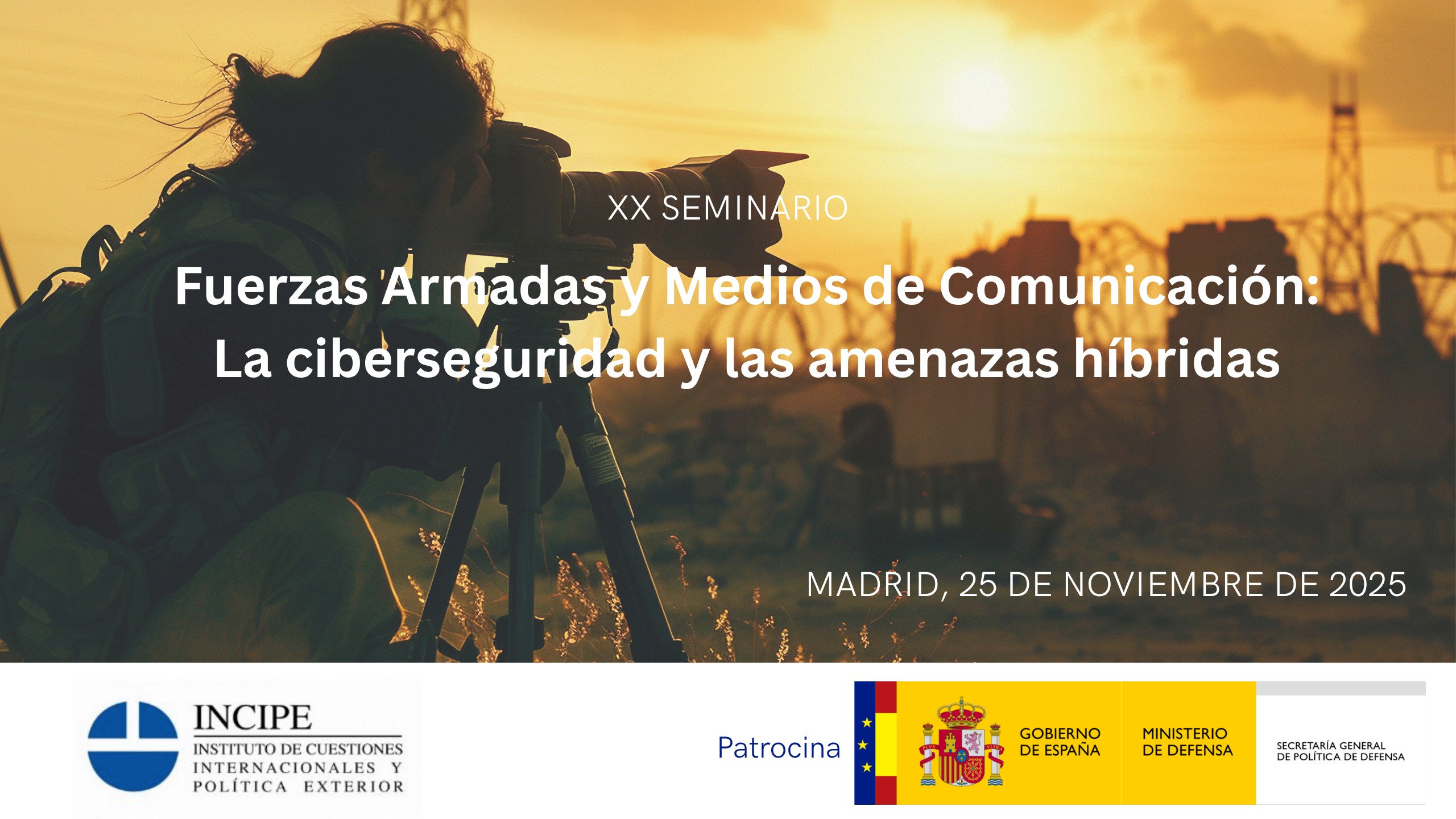
This twentieth edition featured two roundtables. The first, «Disinformation and Fake News in the Context of Hybrid Warfare,» was moderated by Vicente Garrido, Director General of INCIPE, and included Colonel José Luis Calvo, Director of the Division of Coordination and Security and Defence Studies (DICOES) at SEGENPOL, Ministry of Defence; Pilar Requena, Director of Documentos TV (RTVE) and Chair of the UER Investigative Journalism Network; and retired Colonel Ángel Gómez de Ágreda, Regional Director of EUROPAVIA for the Middle East.
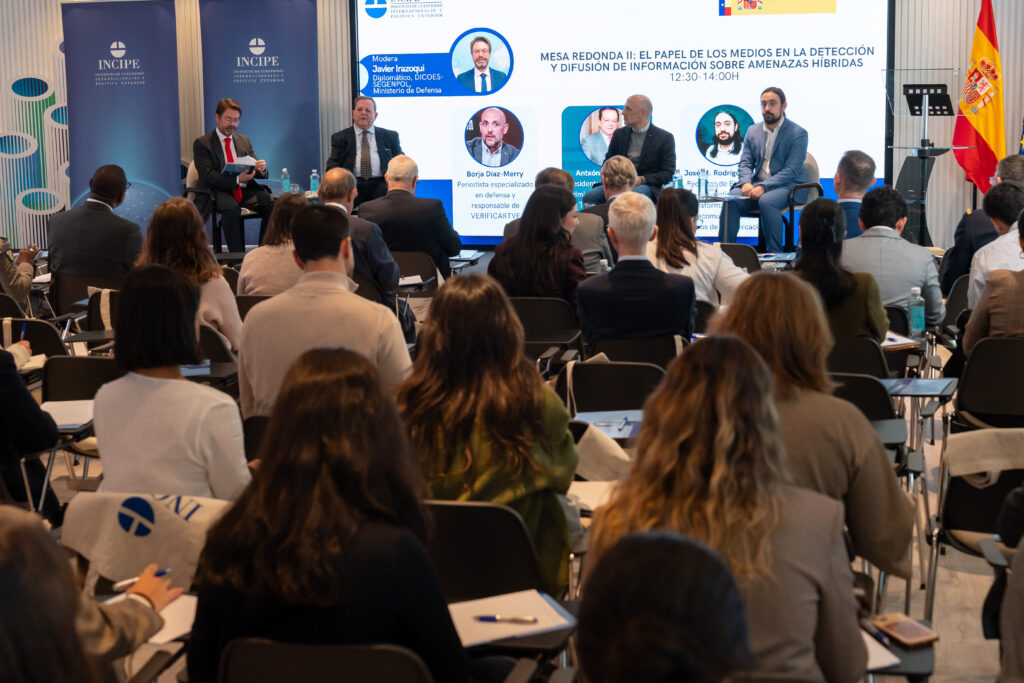
The second roundtable, titled «The Role of the Media in Detecting and Disseminating Information on Hybrid Threats,» was moderated by Javier Irazoqui, diplomat at DICOES–SEGENPOL, Ministry of Defence, and featured Borja Díaz-Merry, defence journalist and head of VERIFICA RTVE; Antxón Sarasqueta, Chair of the Board of Radio Televisión Madrid and member of INCIPE’s Board of Trustees; and José M. Rodríguez, journalist at El Mundo specializing in digital transformation, telecommunications, and media.
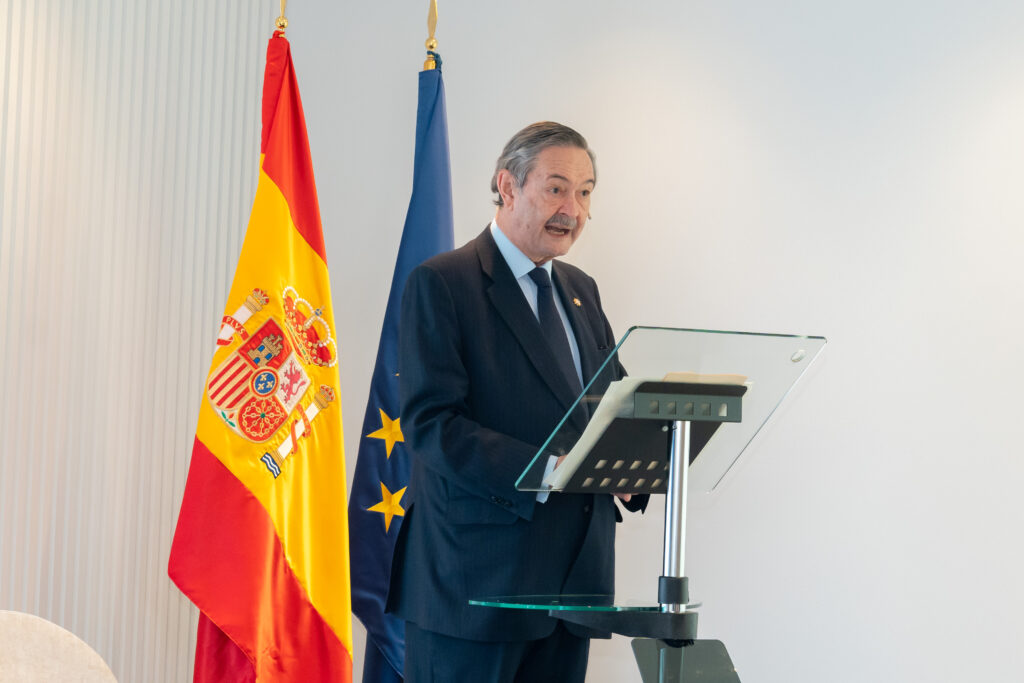
Ricardo Díez-Hochleitner highlighted that, for two decades, this seminar has played a key role in analysing issues that affect defence, security, and the interaction between institutions and media in an increasingly complex and interconnected environment. He noted that hybrid threats combine military and civilian dimensions, which is why this edition brought together high-level experts from the military, academic, journalistic, and diplomatic sectors to reflect on how such threats are detected, interpreted, and communicated, as well as the mechanisms that enable collective responses.
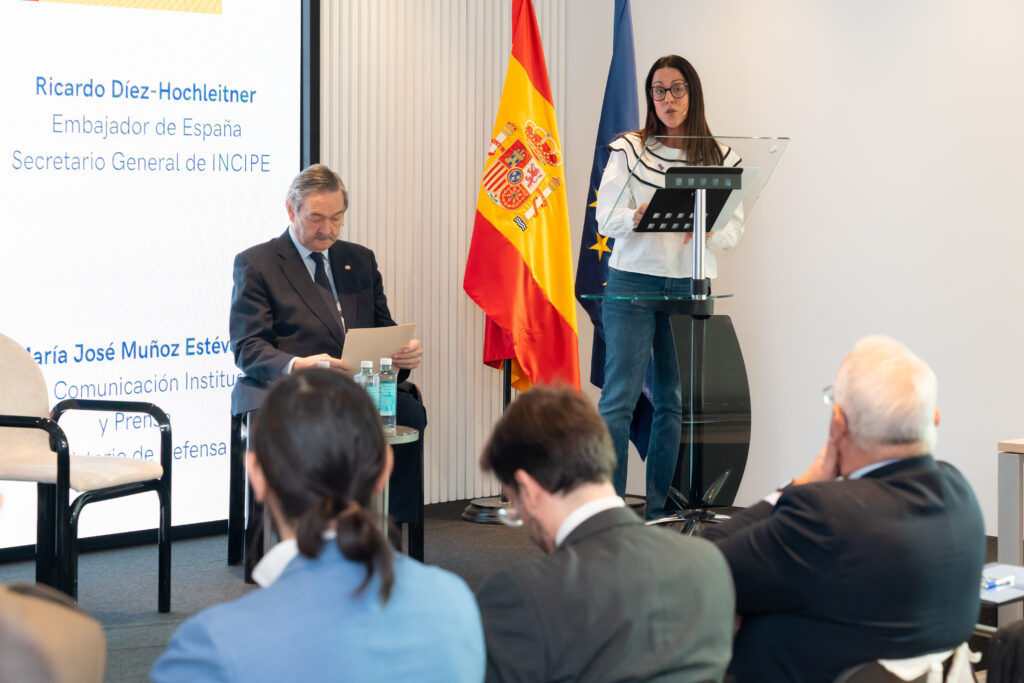
María José Muñoz Estévez, Head of Institutional Communication and Press at the Ministry of Defence, emphasized cybersecurity as a guarantor of citizens’ everyday interactions. She warned that technological advances carry new risks and that, in the twenty-first century, defence and security are no longer confined to the physical realm but extend to cyberspace, which has become a crucial operational theatre for preserving sovereignty, territorial integrity, and state stability. She stressed that modern warfare is also fought with words, images, and data, positioning the media strategically: well-managed communication can deter, influence, and reinforce internal unity, while poor management can erode public trust and create destabilization.
Muñoz Estévez also recalled that we live in an era of hyperconnectivity, where social networks play a central role as spaces for information and debate, but also as fertile ground for the spread of false messages and influence campaigns. She emphasized that information today is both power and vulnerability, and that every citizen has a direct responsibility to protect the information ecosystem through critical thinking and responsible verification. She concluded with a reflection summarizing her message: “Disinformation is countered with knowledge; falsehoods, with prudence; and interference, with an informed, critical, and resilient citizenry.”
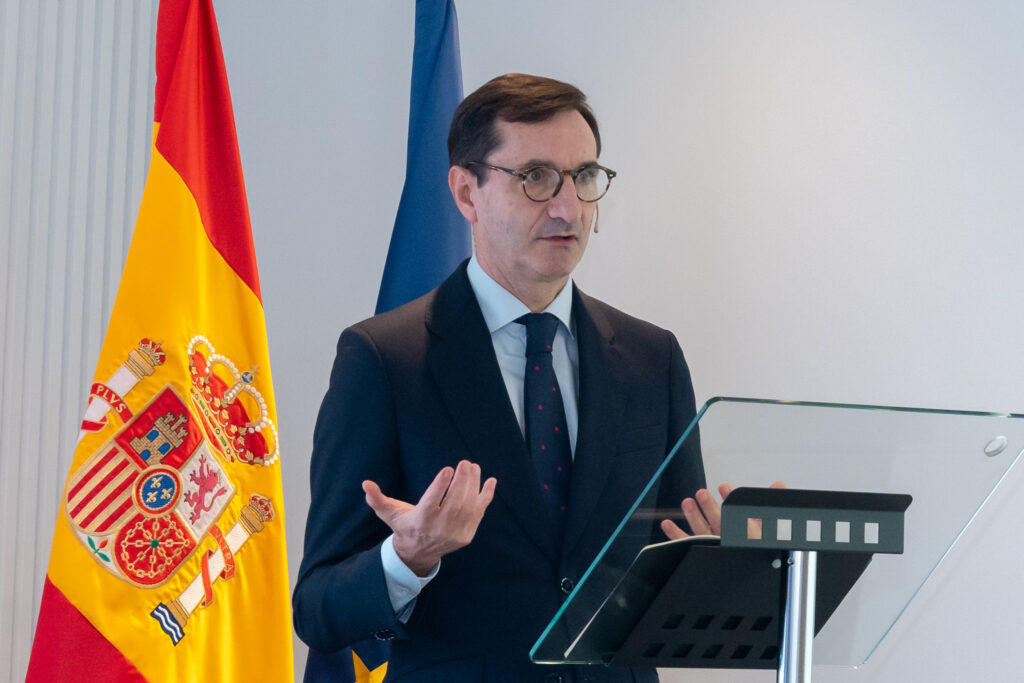
Antonio Notario opened the inaugural lecture by underlining that cyber threats and disinformation are now central to National Security. His presentation was structured around five key points shaping the strategic landscape and guiding the development of the new National Security Strategy.
First, he highlighted the speed at which significant events unfold, noting that decades may pass with little apparent change, while some weeks carry the strategic weight of decades. Second, he focused on Europe’s critical juncture since the start of the war in Ukraine in 2022, pointing to dynamics affecting the continent’s stability: power balance tensions, the rise of populist movements, social radicalization, and increasing political polarization.
The third point addressed the use of technology as a source of strategic advantage, noting that technological superiority affects not only military capabilities but also institutional resilience and the protection of national interests.
The fourth point examined the impact of new technologies on the cognitive domain, or their ability to shape how we think and make decisions. This sphere is influenced by hyperbole and noise on social media, tit-for-tat political conflicts, and the proliferation of “alternative truths,” compounded by disinformation from external actors in hybrid campaigns.
Finally, Notario advocated for more modern and cooperative ways of working, supported by a private sector increasingly involved in building a safer nation.
All these key points are being considered in the forthcoming National Security Strategy currently under development. Notario also reaffirmed the strength of Spain’s National Security project since 2012, built on an open, multidisciplinary approach structured in three concentric circles: protecting citizens at the core, securing Spain at the intermediate level, and committing to international peace and human rights at the external level. He concluded by emphasizing the role of the National Security System itself, anchored by the National Security Council and supported by various committees and collaborative bodies, including the Comprehensive Forum on National Security Culture, where INCIPE and its Director, Vicente Garrido, participate representing Spanish think tanks.
Disinformation and Fake News in the Context of Hybrid Warfare
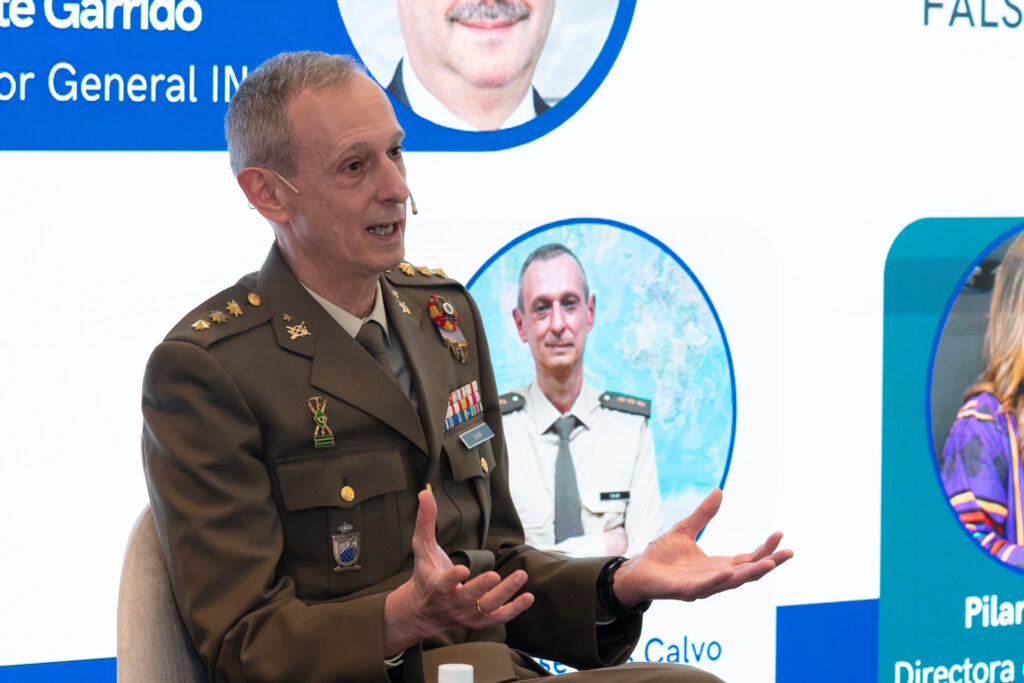
During the first roundtable, Colonel José Luis Calvo focused on how disinformation campaigns directly affect security. While information manipulation has always existed, its impact has surged due to the hyperconnected digital environment. He offered a historical overview of influence operations, traditionally used to complement military actions by deceiving adversaries, demoralizing enemy populations, and undermining trust in leadership. Social changes, such as higher literacy and the influence of public opinion, alongside technological advances, particularly television and digital platforms, have shifted this logic, making influence operations central to some strategies, while military, diplomatic, or economic dimensions are now complementary.
Colonel Calvo emphasized that today’s hyperconnected world, coupled with political and social friction, increases vulnerability, even in conventional conflicts like Ukraine. To combat disinformation, he stressed the importance of reinforcing social trust in institutions and leaders, restoring education as a driver of critical thinking, verification, and rigorous source evaluation. He also recommended that institutions update communication tools, integrating new technologies coherently and transparently. Lastly, he highlighted the need to improve analysis, detection, and response capabilities, developing counter-narratives when necessary, with the ultimate goal of protecting citizens.
Retired Colonel Ángel Gómez de Ágreda provided a broader perspective on the impact of hybrid warfare on society. He explained that combining conventional and influence operations creates synergies designed to provoke emotions and shape narratives. Institutional communication is complicated by differing objectives and channels across organizations, reducing overall influence. Adding to this challenge are Advanced Persistent Manipulators—entities created specifically to manipulate public opinion, particularly on social media—promoting information bubbles, as seen in Nepal and previously in Myanmar and Sri Lanka, which led to serious unrest.
To address these threats, Gómez de Ágreda proposed developing an “information iron dome” with dual functions: protecting citizens’ data and preventing its misuse. Privacy and data protection are essential and currently being strengthened through new tools and mechanisms. Regarding AI, he highlighted its ability to collect large data volumes, generate persuasive and credible narratives, and saturate the information space with noise, reducing the reach of verified information.
Journalist Pilar Requena concluded the roundtable by providing the media perspective. She noted that despite verification tools and teams, the press contributes to polarization. She also reminded that society tends to consume information that confirms prior beliefs, regardless of accuracy. Requena cited the example of a Belgian journalist infiltrating the Noname057 hacker network to illustrate the media’s role in ensuring informational rigor. She also highlighted campaigns by the Storn-1516 group in Germany, which cloned major news websites to disseminate manipulated content and fake news.
The Role of the Media in Detecting and Disseminating Information on Hybrid Threats
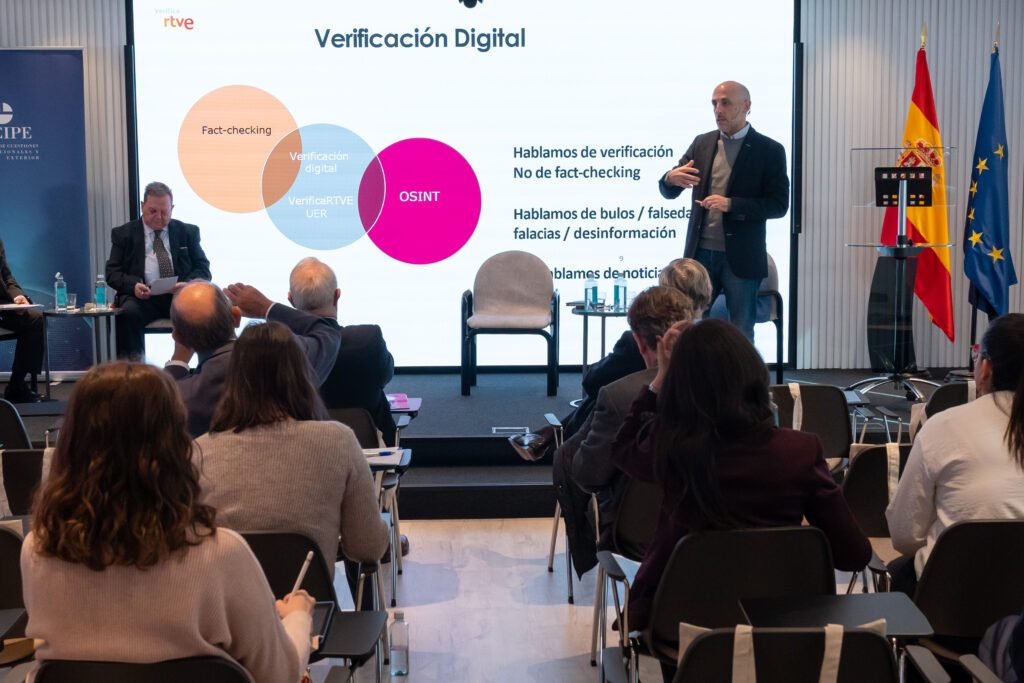
During the second roundtable, journalist Borja Díaz-Merry focused on the work of the VERIFICA RTVE team, specialized in combating disinformation. He stressed that their work goes beyond debunking myths, employing open-source intelligence (OSINT) techniques to verify information. Díaz-Merry distinguished between disinformation—deliberately false or misleading information—and misinformation, which results from unintentional errors. His team primarily targets disinformation due to its greater impact and consequences. He also noted emerging practices such as LLM grooming, involving the spread of false information to train AI models and elicit incorrect outputs.
VERIFICA RTVE is part of the European Broadcasting Union and participates in two alliances: the Investigative Journalism Network, led by Pilar Requena, and Spotlight, the European alliance of public media against disinformation. Díaz-Merry also referenced the international investigation Playing with Fire, aimed at mapping hybrid warfare episodes attributed to Russia. He concluded that verification complements, but cannot replace, on-the-ground journalistic work.
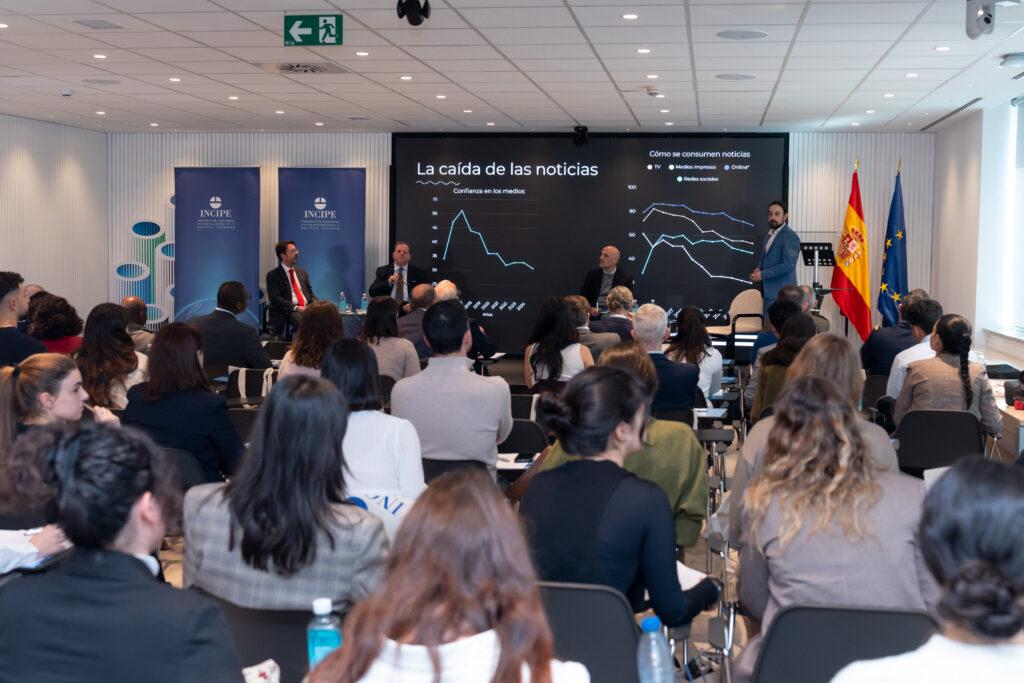
José M. Rodríguez provided a more technological perspective on journalism’s challenges in combating disinformation. He noted that traditional media are no longer the primary sources of information, overtaken by search engines like Google and social networks. Since 2020, news consumption has shifted due to factors such as vertical, ephemeral video; growing reliance on independent content creators; and algorithmic influence determining what content reaches users.
These changes have forced media organizations to choose between maintaining classic journalistic standards or optimizing for algorithmic performance. This trend has contributed to declining public trust in media and reduced news consumption across print, television, and social platforms.
In this context, major tech companies play a crucial role, particularly with the potential arrival of the “zero-click era,” where most information queries would be handled by AI such as Gemini or ChatGPT. Risks include source attribution challenges, deepfakes, inaccuracies, and AI manipulation via influence campaigns. Rodríguez concluded that AI could also present opportunities if strategic partnerships are formed between tech platforms and traditional media to promote verified content, greater transparency, and stronger informational communities.
Finally, Antxón Sarasqueta reflected on the evolution of journalism and contemporary information generation, management, and use. He emphasized that information can serve very different purposes, constructive or harmful, and improper use can have serious societal consequences. Sarasqueta described the current landscape as a genuine information war, where analysts’ roles are increasingly critical not only in journalism but also in military, health, and other sectors that rely on reliable data for decision-making.
Closing remarks
The seminar concluded with remarks from Vicente Garrido, Director General of INCIPE, who stressed the need to strengthen cooperation between institutions, media, and civil society, reaffirming INCIPE’s commitment to a Defence Culture as a space for dialogue and rigorous analysis in collaboration with the Ministry of Defence.
Aranzazu Álvarez