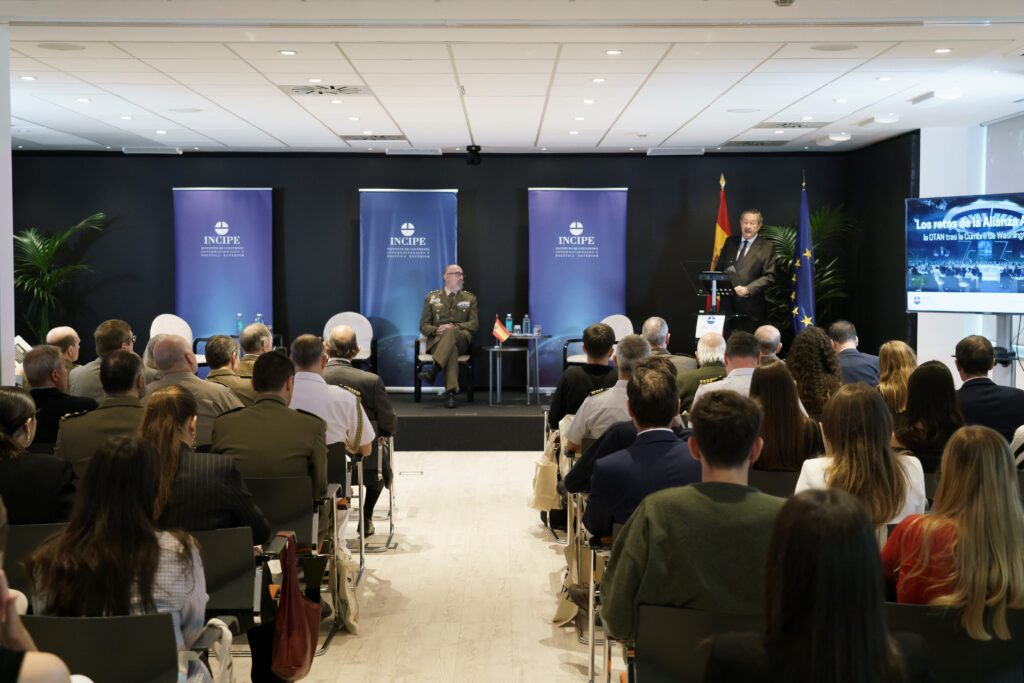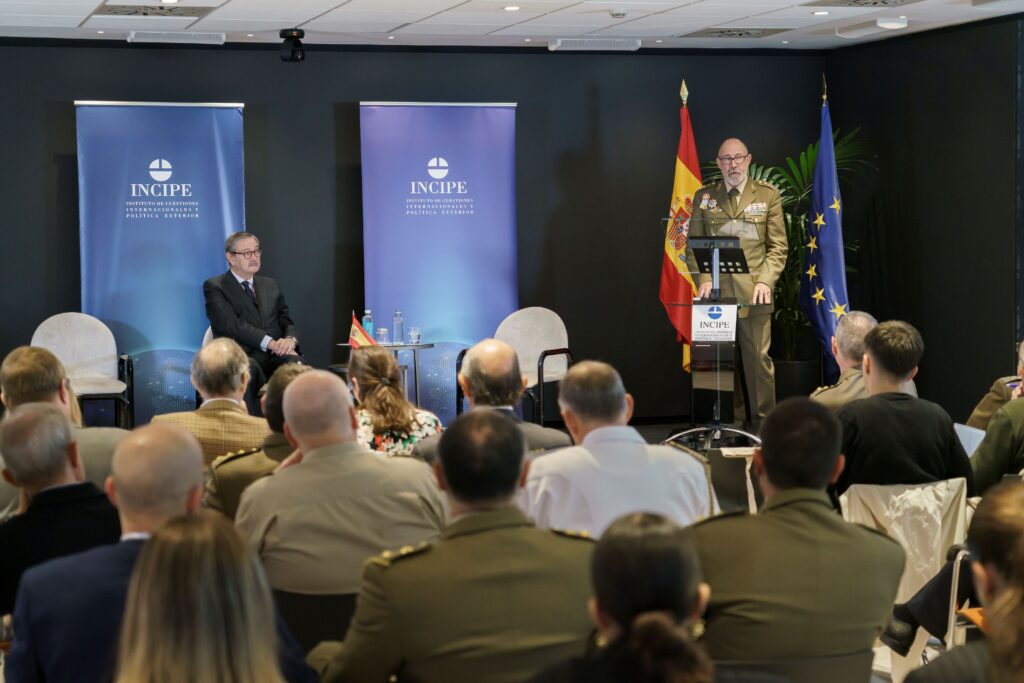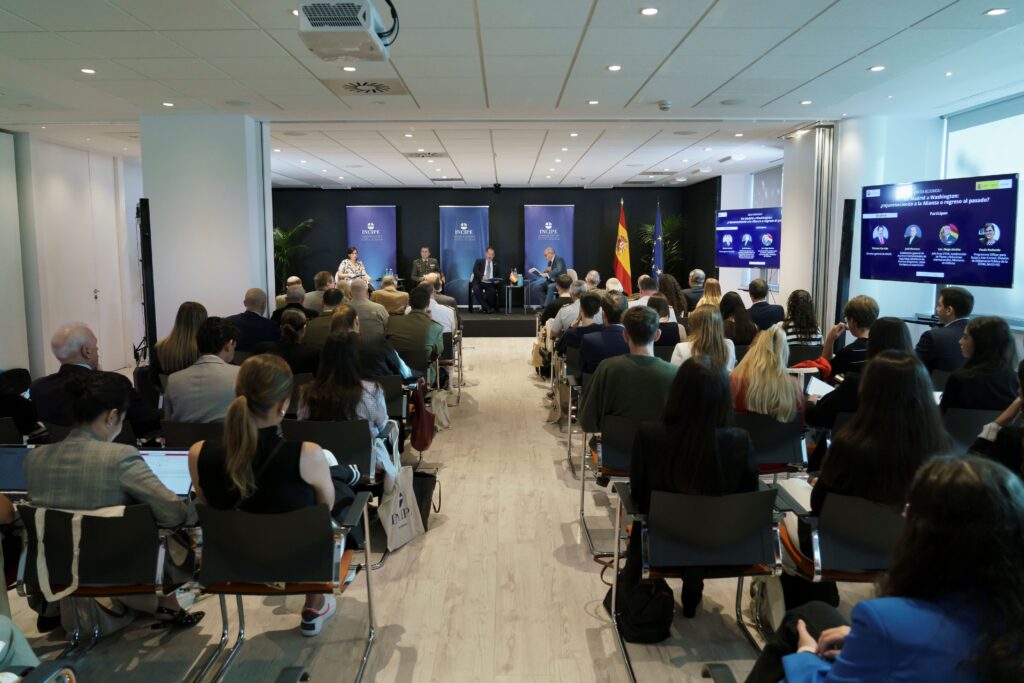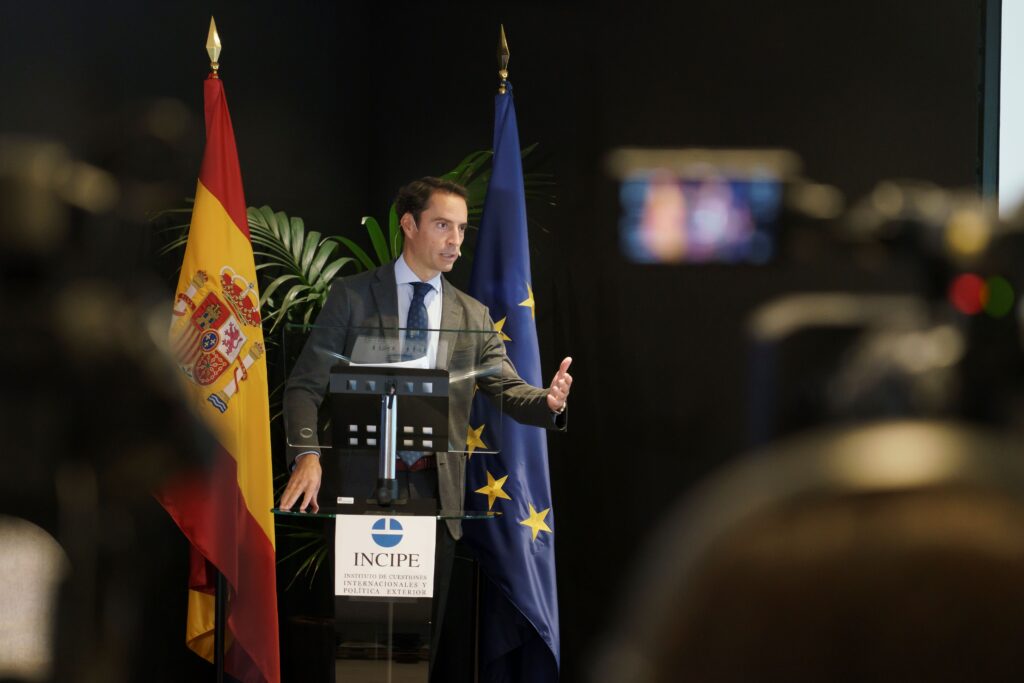
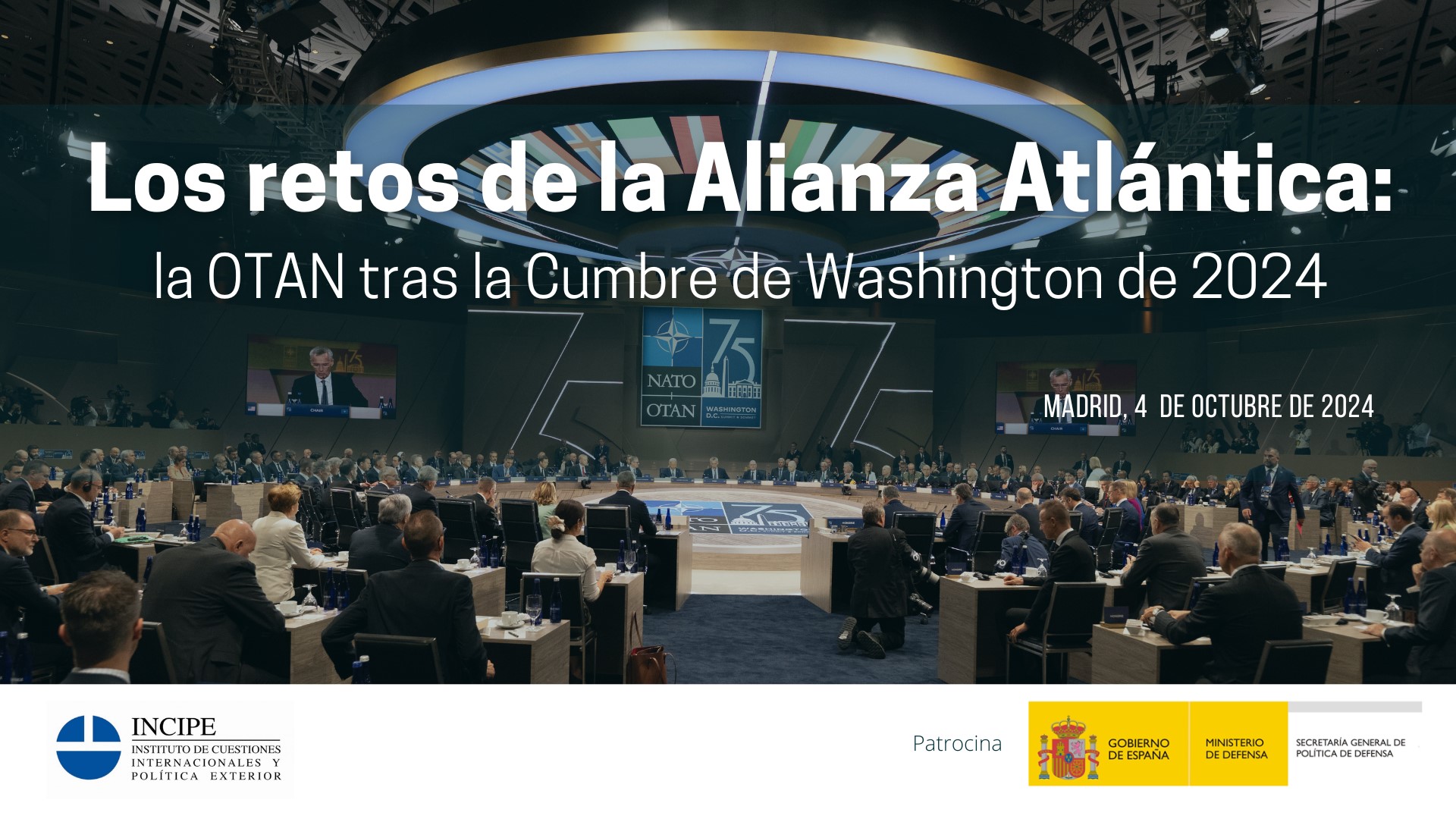
During this conference, we had the opportunity to organize two roundtable discussions. The first, titled From Madrid to Washington: Revitalizing the Alliance or Returning to the Past?, was moderated by Vicente Garrido, Director General of INCIPE. The panel featured José Hornero, Deputy Director General for International Security Affairs at the Ministry of Foreign Affairs, European Union, and Cooperation; Colonel Diego Alcolea, Head of the NATO Area in the Subdirectorate for Plans and International Relations at the Ministry of Defense; and Paula Redondo, Program Coordinator for Russia and Central Asia in NATO’s Public Diplomacy Division.
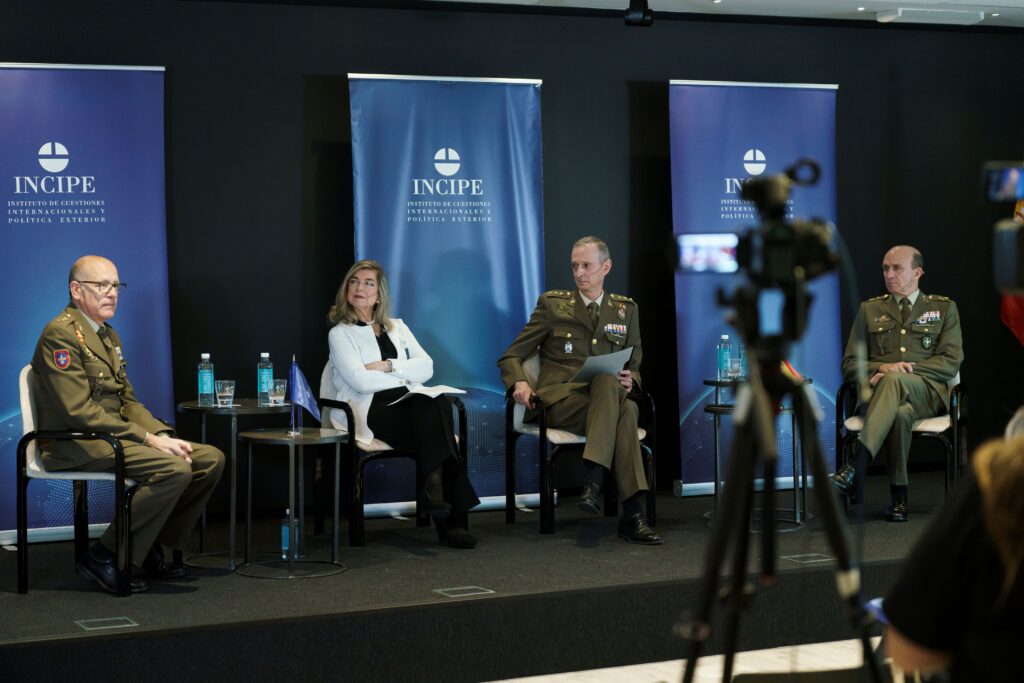
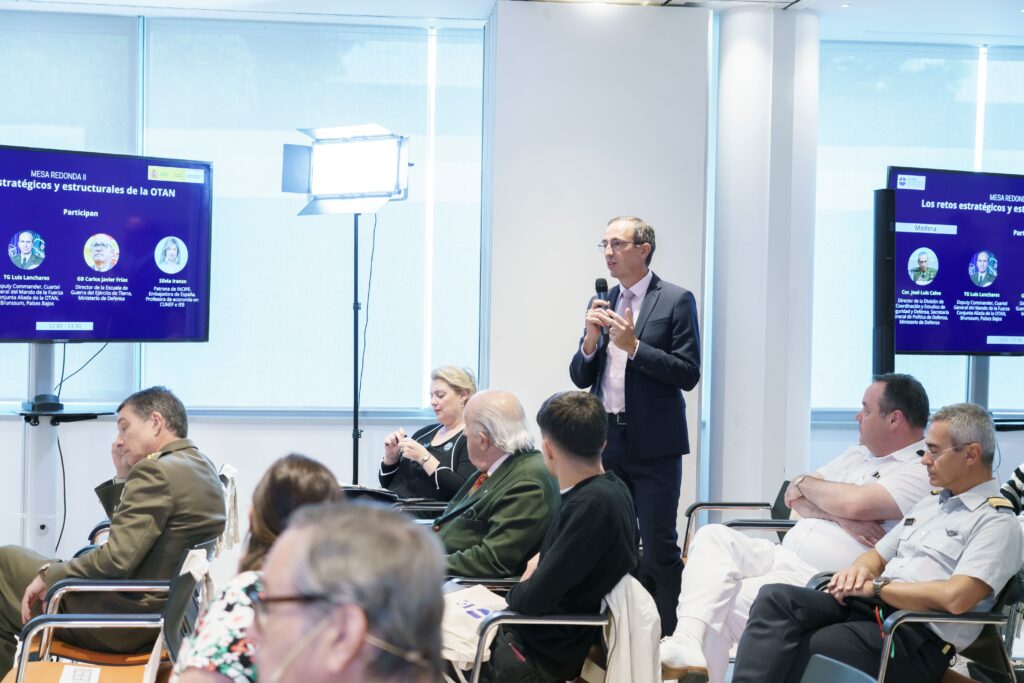
The second roundtable, titled NATO’s Strategic and Structural Challenges, was moderated by Colonel José Luis Calvo, Director of the Security and Defense Coordination and Studies Division at the General Secretariat for Defense Policy of the Ministry of Defense. The panel included Lieutenant General Luis Lanchares, Deputy Commander at NATO’s Allied Joint Force Command Headquarters in Brunssum (Netherlands); Brigadier General Carlos Javier Frías, Director of the Army War College at the Ministry of Defense; and Silvia Iranzo, Trustee of INCIPE, Ambassador of Spain, and Professor of Economics at CUNEF and IEB.
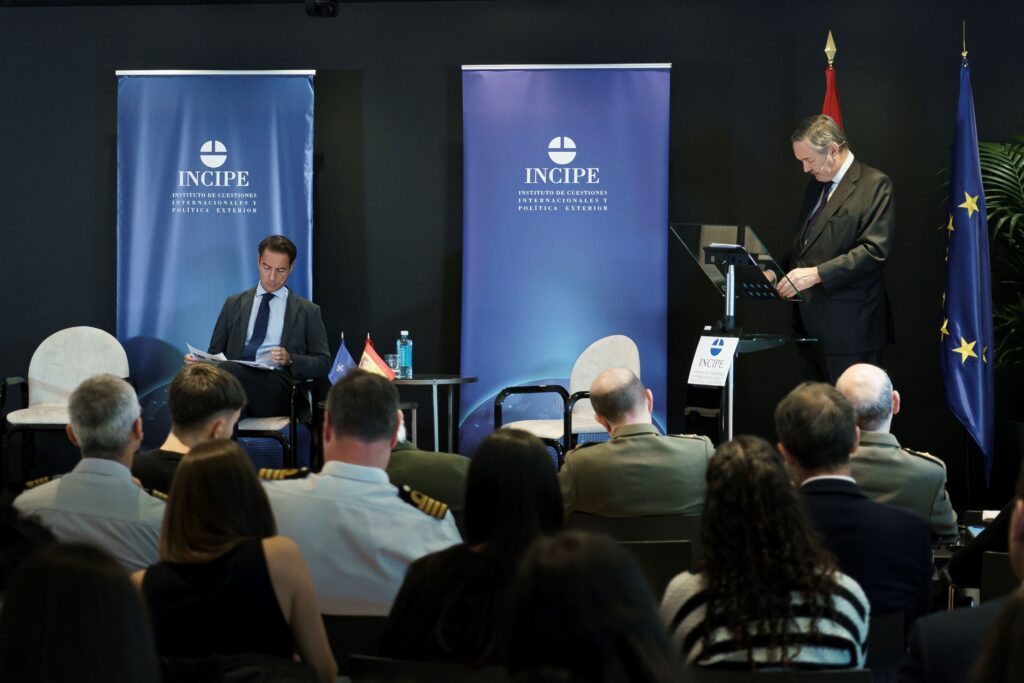
Ricardo Díez-Hochleitner, Secretary General of INCIPE, began his speech by highlighting the crucial moment NATO is experiencing in its 75th anniversary, amidst a complex and decisive international climate and following the recent transition of leadership from former Secretary General Jens Stoltenberg to his successor, Mark Rutte. Echoing Stoltenberg’s farewell remarks, Díez-Hochleitner emphasized that while the world has changed dramatically in recent years, so has the Alliance, undergoing an unprecedented phase of adaptation and modernization. The strengthening of NATO’s unity, cohesion, and deterrence capability is a response to the need to navigate a new environment marked by Russia’s invasion of Ukraine, uncertainty, volatility, and a multiplicity of emerging threats. This reinforcement, Díez-Hochleitner concluded, is further amplified by the Alliance’s key partnerships with external actors beyond the Euro-Atlantic space.
Meanwhile, the Director of CESEDEN, Lieutenant General Miguel Ballenilla, underscored the importance of leveraging the growing public interest in international affairs—spurred by the invasion of Ukraine—to promote awareness of defense culture. He dedicated part of his speech to recognizing Spain’s contributions to the Alliance, stressing its unwavering commitment to NATO over the years. Ballenilla highlighted Spain’s strategic assets, including its geographic proximity to the Southern Neighborhood, its pro-European stance as a bridge between NATO and the EU, and its indispensable perspective on Latin America for fostering partnerships with the region. He concluded by emphasizing NATO’s ability to adapt to the resurgence of geopolitical tensions, ensuring that the Alliance continues to fulfill its founding objectives.
From Madrid to Washington: Revitalizing the Alliance or Returning to the Past?
During the first roundtable, titled From Madrid to Washington: Revitalizing the Alliance or Returning to the Past?, José Hornero, Deputy Director General for International Security Affairs at the Ministry of Foreign Affairs, European Union, and Cooperation, stated that we are in a radically different moment for both the Alliance and the Euro-Atlantic space. Hornero highlighted key factors demonstrating that NATO is not reverting to the past. According to him, new threats—such as hybrid warfare, disinformation, and cybersecurity—underscore the need for greater coordination through new overlapping architectures that ensure the smooth execution of activities aimed at countering them. Additionally, Hornero dedicated part of his speech to explaining how Spain is implementing the key aspects of NATO’s strategic concept. This includes an increased budget, contributions to various strategic NATO systems, and support for the organization’s position regarding the threat Russia poses to the Euro-Atlantic space.
To conclude, Hornero emphasized the need for alignment in member states’ defense investments to ensure their effectiveness, particularly considering the evolving concept of conflict, which now encompasses broader scales beyond high-intensity warfare.
In his remarks, Colonel Diego Alcolea, Head of the NATO Area in the Sub-Directorate of Plans and International Relations at the Ministry of Defense, stated that while the Alliance has returned to its core focus—reestablishing deterrence—today’s NATO bears no resemblance to the original organization of 75 years ago. According to the Colonel, the Washington Summit showcased a NATO that is stronger, more united, and more global. These qualities have allowed the Alliance not only to welcome new members but also to implement the changes proposed in the Madrid (2022) and Vilnius (2023) Summits in a remarkably short period while maintaining consensus among its 32 members. Alcolea also highlighted NATO’s improved operational capabilities in recent years, both on land and in the air. This development has been accompanied by increased defense investment from member states, with Canada and European countries collectively increasing their defense spending by 18% over the past year. Additionally, NATO’s growing global reach is evident in its strengthened cooperation with strategic partners, particularly in the Indo-Pacific and the southern neighborhood.
Diego Alcolea concluded his speech by acknowledging that although NATO faces a challenging road ahead, it will remain the cornerstone of its members’ defense as long as it continues to uphold its unity and essence as a fundamentally military organization and a guarantor of deterrence—elements that have been the keys to its success to this day.
To conclude the first roundtable, Paula Redondo, Program Coordinator for Russia and Central Asia in NATO’s Public Diplomacy Division, explained that since the Madrid Summit, NATO has embarked on its most significant transformation in decades, focusing on deterrence and defense as its cornerstones. In this context, she highlighted the three main priorities of the organization, first outlined in Madrid but further developed after the Washington Summit. The first priority, ensuring that NATO possesses the necessary capabilities to defend against any threat, aims to send a clear message to potential adversaries about the Alliance’s commitment to collectively safeguarding peace. The second priority, supporting Ukraine, represents an investment in NATO’s own security, as an independent and democratic Ukraine is vital for peace, security, and stability in Europe. The third priority, leveraging partnerships to address growing challenges, underscores that while NATO is a regional organization, cooperation with external partners is crucial for tackling global challenges.
Paula Redondo concluded her remarks by emphasizing that these three priorities define the roadmap for addressing current threats. Moreover, given the diverse origins and nature of these threats, she stressed the necessity of building a stronger and more united Alliance than ever before to confront them effectively.
Following the panelists’ presentations, a Q&A session was opened for both in-person attendees and virtual participants. This exchange of ideas and perspectives helped deepen shared knowledge and enrich the discussion within the framework of the Alliance before concluding the session.
The Strategic and Structural Challenges of NATO
The second roundtable, titled The Strategic and Structural Challenges of NATO, focused on the geostrategic challenges that NATO is currently facing and those that lie ahead for the organization.
The first to speak was Lieutenant General Luis Lanchares, Deputy Commander at NATO’s Allied Joint Force Command Headquarters in Brunssum (Netherlands), who highlighted NATO’s constant ability to adapt to new security scenarios, as well as its commitment to achieving a credible deterrence posture. Lanchares explained that the current actions of the military command are merely the consolidation and refinement of political mandates received at previous summits. The Lieutenant General identified four main challenges that the Alliance is facing: consolidating deterrence and defense postures to ensure that political mandates are executable at the military level; aligning the specific objectives of each member state with the Alliance’s broader interests; ensuring the availability of resources necessary for military operations; and maintaining continuous support for Ukraine.
Luis Lanchares concluded his intervention by reiterating the partiality of political commitment in ensuring the Alliance’s agency. Additionally, he emphasized that the return to collective defense does not imply a return to the past, as the way operations are conducted to achieve this defense has significantly evolved.
In his speech, Brigadier General Carlos Javier Frías, Director of the Army War College of the Spanish Ministry of Defense, pointed out that today’s threats are symptoms of the instability of the multipolar world we are entering. In a deteriorating security environment, NATO will play an increasingly important role, as it is the key tool for ensuring the peace and security that are fundamental to our way of life. However, Frías explained that the multidomain world will also impact the nature of threats, which will originate from an increasingly broad spectrum, both in geographical terms and in their nature. In this regard, one of NATO’s greatest challenges is expanding its operational range to address this growing variety of threats.
Frías also highlighted other challenges, such as Russia’s presence in Africa, the ideological nature of China’s struggle for hegemony, and the additional complexity that the internet adds to managing disinformation and information warfare. He concluded by stressing the need to defend the system of values shared by all allies, which ensures prosperity and cohesion within the Alliance.
Silvia Iranzo, a member of INCIPE’s Board of Trustees, Spanish Ambassador, and professor of economics at CUNEF and IEB, closed the second roundtable by focusing on companies that produce military goods. According to Iranzo, discussing military industry companies inevitably involves discussing the European Union, as it not only shares members with NATO but is also the region that invests the most in defense globally, almost at the level of China.
One of the biggest challenges for these companies is improving the efficiency of their production processes, eliminating inefficient or unsuccessful models while retaining only the most advanced ones. This would enhance interoperability at the European level and, consequently, within NATO. Furthermore, given the significant investment in R&D required to develop cutting-edge equipment, as well as the lengthy maturation process, there is a clear need for the public sector to secure long-term contracts for developers, in addition to providing initial financing and ongoing maintenance support. Other challenges highlighted include the importance of allowing equipment exports to ensure the profitability of large-scale activities and the difficulty of increasing defense spending without violating EU fiscal regulations.
To conclude, Iranzo emphasized the importance of aligning NATO’s interests with those of taxpayers by raising public awareness about the significance of defense spending.
Following the speakers’ interventions, the session moved into the second debate, where both in-person participants and virtual attendees had the opportunity to ask questions, further enriching the discussion.
Closing remarks
To conclude the Conference, we had the closing remarks of Javier Colomina, NATO Deputy Assistant Secretary General for Political Affairs and Security Policy and Special Representative of the Secretary General for the Southern Neighbourhood. He began his speech by emphasizing NATO’s ability to maintain Euro-Atlantic peace and security amid the complex international situation we are currently facing.
Colomina highlighted the effectiveness of deterrence in maintaining stability, with the Washington Summit marking the most significant reinforcement of collective security in the organization’s history. These new ambitions require an increase in resources from member states, both in military and economic capacities. He also underscored the centrality of support for Ukraine in NATO’s current roadmaps, focusing on practical cooperation, financial assistance, and political rapprochement with the organization.
Javier Colomina concluded by emphasizing the value of partnerships, which enable a joint response to current challenges and threats. He placed particular focus on the Southern Neighbourhood Action Plan, specifically in his role as Special Representative. His function involves coordinating all of NATO’s activities in the South, with a focus on four pillars: political dialogue not only with partners but also with non-partner actors and NATO allies themselves; practical cooperation in supporting partners; increasing NATO’s visibility and presence through the opening of political offices in partner countries that request them; and interaction with regional organizations within the Southern Neighbourhood.
Lucía Rodríguez