
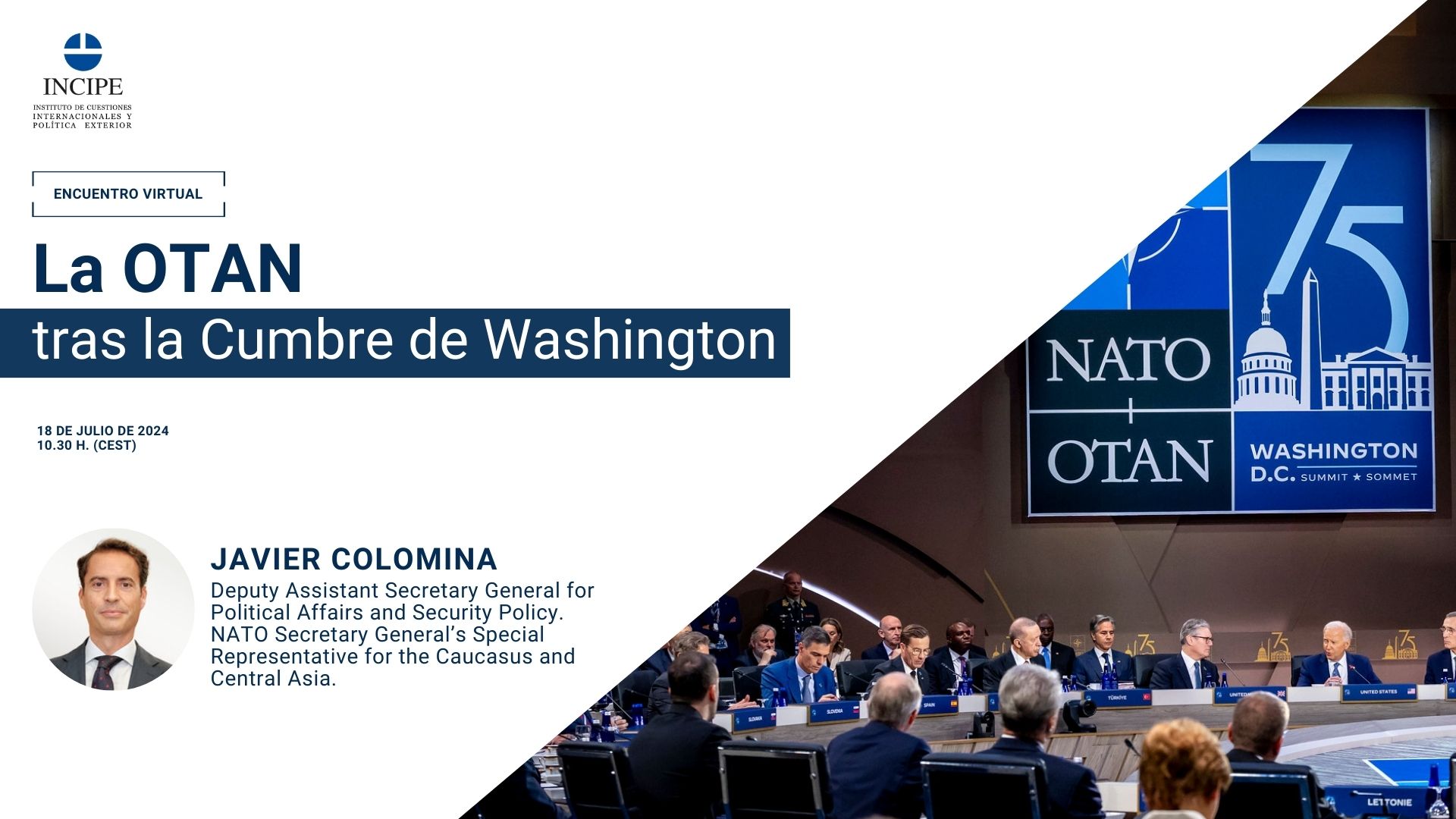
Javier Colomina began his presentation by emphasizing that the NATO Summit in Washington, which marked the 75th anniversary of the Atlantic Alliance, was not only significant in symbolic terms but also produced substantial results. One of the key themes of the Washington Summit agenda was the war in Ukraine. Colomina pointed out that supporting Ukraine has been a NATO priority since the start of the war in February 2022. Ukraine has been supported in various ways, including through training and assistance for Ukrainian military personnel. Approximately 700 personnel have received support at logistics bases outside Ukraine.
In terms of financial aid, NATO member countries have committed to guaranteeing 40 billion dollars annually to Ukraine, setting approximate quotas for each member. This aid solidifies the existing economic support, which had previously been provided on a voluntary and bilateral basis, and, following the Summit, will be channeled through NATO to ensure Allies contribute as agreed.
On another front, the issue of Ukraine’s approach to NATO and its potential membership was discussed, with the clear understanding that while the conflict continues, Ukraine cannot join the Alliance. However, work is actively underway to build a «Bridge to Membership» through decisions that make Ukraine’s future membership an irreversible path.
Another key focus of the Summit agenda was collective defense and NATO’s deterrence capabilities. In this regard, Colomina emphasized NATO’s rapid mobilization, which deployed 40,000 soldiers, 100 ships, and 300 fighter jets in the first two weeks of the war to ensure the territorial integrity of member countries. Following the new decisions made, NATO will be able to deploy up to 500,000 soldiers in a similar timeframe, a capability no country in the world currently possesses.
The third group of decisions was related to partnerships and existing relations with NATO’s allies. NATO currently has 35 partners around the world, ranging from Colombia to New Zealand. Leaders from four Indo-Pacific countries—Japan, Australia, South Korea, and New Zealand—participated in one of the Summit sessions. The President of the European Council, Charles Michel, and the High Representative, Josep Borrell, also attended on behalf of the European Union. The EU is a unique and strategic partner, whose collaboration has been essential since the start of the war in Ukraine.
Within the partnership framework, Colomina highlighted the recent approval of an action plan for the South, which resulted from a lengthy negotiation process and a subsequent report from a group of experts on the region. This plan will help increase NATO’s presence and capacity in the southern neighborhood, as well as improve assistance, training, and the capabilities of partners in the region. Currently, the Alliance has eleven partners in this area, four of them in the Gulf and seven in the Mediterranean, but new relationships are being explored, including with actors such as Saudi Arabia and the African Union.
A key element of the action plan for the South is the opening of a NATO office in Amman, Jordan, and the potential opening of another office in the Maghreb region. This will increase NATO’s political presence in the area, facilitating practical cooperation and coordination with local partners. Additionally, plans are underway to appoint a special representative for the South, whose responsibility will be to coordinate and effectively implement the action plan.
Javier Colomina concluded his presentation by emphasizing the significance of these decisions for the stability and security of the Euro-Atlantic region, and expressed his willingness to answer the questions posed by our live audience during the debate that followed his intervention.
Aranzazu Álvarez