
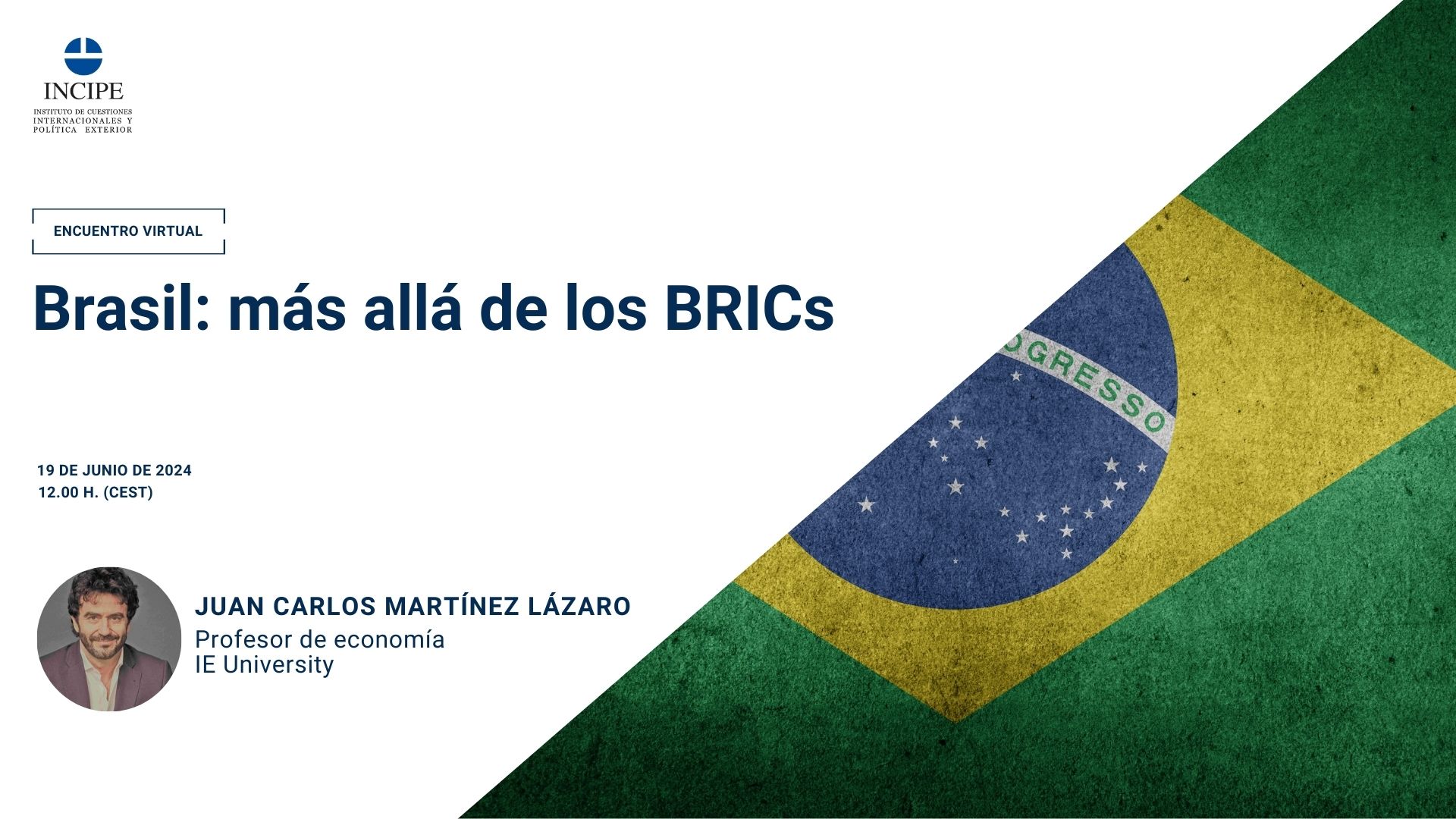
Juan Carlos Martínez Lázaro began his presentation by highlighting the evolution and growth of the Brazilian economy, which has reached a growth rate of around 2%. He emphasized that Brazil was largely unaffected by the impact of the pandemic due to the special policies implemented by President Bolsonaro during that period. According to Martínez Lázaro, the growth of the Brazilian economy over the last 25 years has been remarkable, although it has only been surpassed at certain points in the past decade. Additionally, he noted that the best period for Brazil’s economy occurred in the 2000s.
In 2009, Goldman Sachs forecasted that Brazil would become the fifth-largest economy in the world by 2025, surpassing France and the United Kingdom. By 2010, the country had already solidified itself as the eighth-largest global economy and had successfully hosted the FIFA World Cup, as well as the 2016 Olympic Games. Martínez Lázaro highlighted these events as examples of both Brazil’s economic and social growth.
However, all of the country’s success vanished, and Brazil fell into a period of social instability, which lasted until the attempted takeover of the Brazilian Parliament and culminated with the return of Lula Da Silva to power in 2023, with the aim of restoring the growth agenda and strengthening Brazil’s international standing. “In 2015-2016, the Brazilian economy experienced two consecutive years of recession, something that hadn’t happened since 1930-1931”, pointed Martínez Lázaro. “We are witnessing the end of the super-cycle of commodities that Latin America had experienced since the early 2000s.”
Brazil’s trading partners from an export perspective have evolved over the years, Martínez Lázaro pointed out. Currently, 50% of Brazilian exports go to Asia, while 30% are directed to the Americas, including Argentina, which has historically been a key partner alongside the United States. “We also see how China has become Brazil’s main trading partner since 2009,” the speaker added.
Currently, Brazil also shows significant dependence on China from an import perspective. More than 20% of its imports come from the Asian giant, compared to 16% from the United States. On the other hand, Argentina remains at 5%, surpassed by Germany, which accounts for 5.5% of imports. Although Asia does not dominate Brazilian exports in the same way, its importance is growing in terms of imports, reinforcing Brazil’s bilateral trade relations with the region.
Brazil is not only an exporter of raw materials but also of natural resources, which explains why Asia is its main trading partner. Petroleum exports are increasingly important to the Brazilian economy. In the last four years, oil production has increased to about 3.5 million barrels per day, and by 2030, the country expects to produce around 5 million barrels per day. This positions Brazil as one of the largest producers of this natural resource.
“The real problem of the Brazilian economy lies in its public finances,” Martínez Lázaro stated. While inflation is a constant issue in Brazil, it is under control. However, the fiscal deficit remains one of the country’s greatest economic concerns, although it stood below 3% in 2023, something that had not been achieved in many years. Despite this progress, public debt remains significant, directly impacting the cost of financing for the country.
Through the policies of Lula Da Silva, Brazil aims to become a global leader through international alliances. The country is currently the eighth-largest economy in the world, though its economic outlook is far from what it was in the 2000s. Lula Da Silva has resumed the international agenda, which had deteriorated significantly due to events in the country since 2013. Lula aims to maintain good relations with the United States, the largest investor in Brazil, but also seeks to strengthen cooperation with China. This creates contradictions in the country’s international landscape due to the existing global tensions between the United States and China in various areas. Brazil aims to restore its global agenda independently while working closely with BRICS countries.
Regarding trade alliances, Brazil faces a complex situation due to its dependence on Asia, while it also participates in Mercosur and the Free Trade Agreement with the European Union. However, beyond the commercial sphere, Brazil continues to aspire to be a global political power, which underscores the importance of its military development.
To conclude his intervention in the virtual session, Martínez Lázaro outlined the necessary changes to boost Brazil’s economy. Brazil urgently requires fiscal stabilization, as well as structural reforms and greater trade openness. Additionally, the country faces an urgent need to stimulate economic growth.
After Juan Carlos Martínez Lázaro’s presentation, a debate was opened in which participants raised questions on topics such as multilateralism, Brazil’s rapprochement with Russia and China, regional relations, international markets, fiscal policies, and renewable energy, among others.
Palmira Reboto