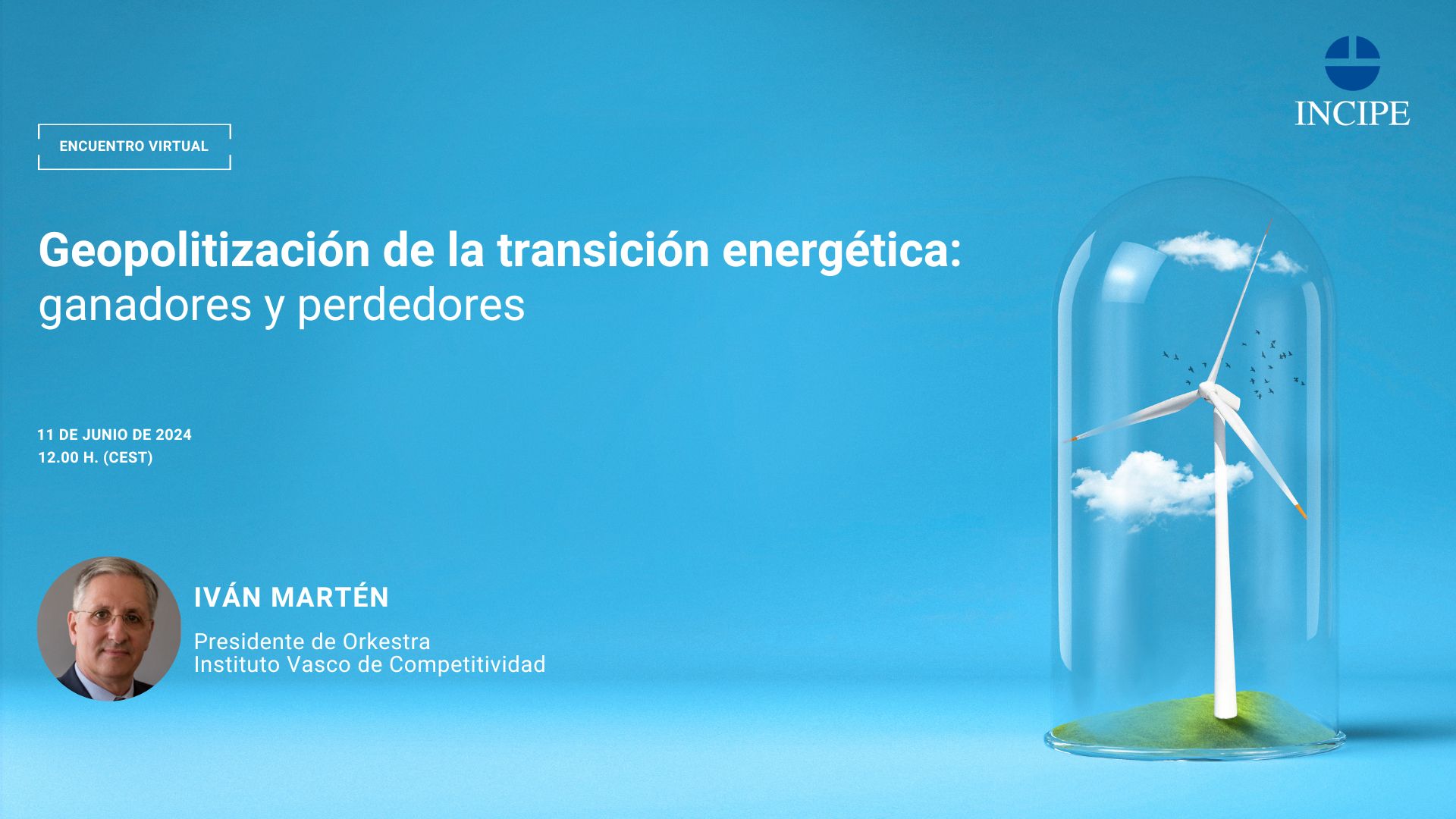
Iván Martén began his intervention by highlighting the importance of the energy transition we are currently experiencing and how this transformation is shaping the winners and losers. «The well-being of a country depends on achieving two things: sustainable competitiveness based on responsible and inclusive development of our resources, and effective sustainability that allows us to meet environmental goals,» said Iván Martén. Climate change is a reality that requires global solutions. Europe is responsible for 33% of global emissions.
«Developing countries are the main ones affected by the consequences of climate change,» emphasized Iván Martén. This phenomenon is at the root of many of the migration problems that are occurring due to climate change. This situation is significantly worsened by global population growth, which increases emissions that continue to rise by 1.5% each year, instead of the 7% reduction that was expected. All of this demands urgent, realistic, and effective solutions that consider the consequences of the energy transition on the economy and the well-being of the global population. The challenge we face today is to decarbonize the global economy as much as possible at the lowest social cost, according to Martén.
The energy transition has significant geopolitical implications. The first of these is the change in value chains, based on the critical minerals and materials necessary for future technologies. The second refers to the location of production centers, which are shifting to places that offer lower energy costs or have fewer environmental requirements, creating an export of emissions. Additionally, this transition has modified trade relations, as well as the energy trilemma and energy security. All of this has caused geopolitical changes, with some countries emerging as winners and others as losers, while also generating new alliances.
Iván Martén summarized this energy transition as a shift from Russian gas to Chinese raw materials. China takes the gold medal in this transition due to its control over the new value chain and the critical materials needed to carry it out, as well as its dominance in 29 technological areas. China is developing a very pragmatic industrial and energy transition in order to achieve industrial dominance while contributing to the environment, said Martén. Following with the silver medal, the United States is experiencing a situation of self-sufficiency, enjoying much cheaper energy. Therefore, the transition in the North American country is focused on ensuring the security of supplies and protecting industry.
Europe ranks as a loser in this energy transition, going from representing 22% of global GDP in 2010 to only 17.5%, while countries like China and the United States have gone from 9% to 17% and from 22% to 26%, respectively, as Martén pointed out, leading to a loss of weight in the global economy for Europe. On the other hand, the continent finds itself in a situation of great dependence on third countries for more than 200 strategic products, generating the need to take advantage of the energy transition in order to reindustrialize Europe, thus creating quality jobs.
The energy transition in Europe has been characterized by three phases. The first is based on a very strong but idealistic commitment to the environment, due to the ambitious goals that have been set. The second phase began in 2022 with the reaction to American policies, launching European policies that addressed similar issues to the U.S. ones, but facing European fragmentation. Finally, the third phase we are currently living through presents the need to reconsider some European measures and achieve greater integration between energy, industrial, technological, and environmental policies.
Iván Martén closed his intervention with a reflection emphasizing the need for decisive action in a global environment where multilateral organizations, such as the United Nations or the International Energy Agency, are not contributing effectively. There is an imperative need for greater dialogue between developed countries.
After Iván Martén’s intervention, a debate was held in which participants asked questions about supply shortages, public opinion, the change in European thinking, the impact of advanced economies, critical minerals, geothermal energy, nuclear energy, and common energy policy.
Palmira Reboto