
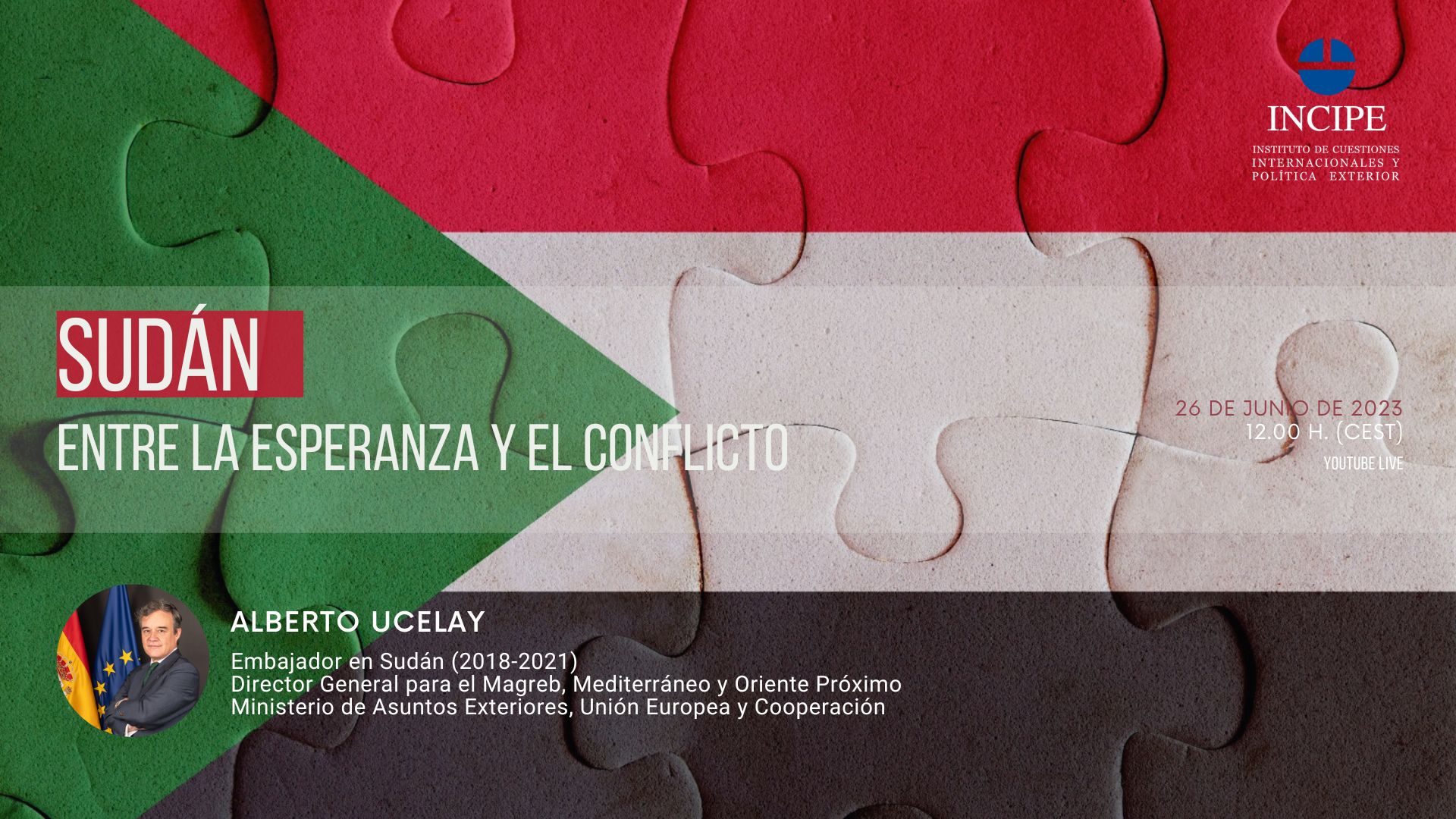
Alberto Ucelay began his speech by explaining Sudan’s current situation, emphasizing that the country has long been a host for refugees, even before the outbreak of the recent crisis. He also highlighted Sudan’s strategic importance due to its location between the Sahel and the Horn of Africa. He then outlined the two key themes of his presentation: hope and conflict.
Regarding hope, he recalled that the latest attempt to bring democracy, freedom, and progress to Sudan, which began in 2019, was preceded by three previous failed attempts, each thwarted by military coups in 1956, 1964, and 1985. Ucelay argued that Sudan is not doomed to fail a fourth time and that the international community must support the country’s democratic consolidation. He then described the three phases of the current conflict, which began in 2019 with a revolution sparked by protests that led to the military leader, General Burhan, and Hemedti, leader of the Rapid Support Forces (RSF), overthrowing Omar al-Bashir, Sudan’s dictator for 30 years. This revolution culminated in a political agreement in July 2019, brokered by the European Union, Ethiopia, and the United Nations. In August 2020, another peace agreement was reached to address long-standing local conflicts within the country. However, Ucelay explained that this was the moment when the 2019 agreement was altered, leading to difficulties in finding a democratic path and transitioning from revolution to institutional governance.
This is where conflict comes into play. The struggle revolves around two main figures: General Burhan, the head of the armed forces, and Hemedti, the leader of the paramilitary forces. Ucelay described this as a conflict between the center and the periphery, between those who have always held power and those who have not. He also pointed out several missteps, including the absence of a political framework for parties and the failure to implement a crucial DDR (Disarmament, Demobilization, and Reintegration) program. Additionally, he highlighted the urgent need for economic, educational, and media reforms in Sudan.
Finally, Ucelay outlined key lessons learned, emphasizing the importance of respecting the fundamental agreements established at the beginning of the transition period rather than altering them to suit changing circumstances. He also stressed the need to safeguard civil and political liberties, as well as legal and procedural guarantees. Furthermore, he called for the International Monetary Fund and the World Bank to develop specific instruments for African transitions, alongside meaningful engagement from the African Union and the Arab League.
Regarding the steps to follow in the future, he highlighted the significance of U.S. and Saudi mediation in achieving a ceasefire, the necessity of securing a political agreement, and the importance of ensuring that while Sudanese leadership remains central to the process, international support is crucial.
At the end of the session, a debate took place in which participants raised questions about issues such as the destabilization of the region due to the conflict, underscoring the need for mediation and effective management of the refugee crisis. The discussion also addressed the potential independence of Darfur and the presence of Janjaweed militias, stressing the importance of avoiding polarization and ensuring the integration of all regions of the country. Furthermore, the role of Spain was debated, particularly regarding how to prevent a military-paramilitary conflict from escalating into a civil war. Finally, concerns were raised about the destabilizing influence of militias like the Wagner Group and the need to counteract their presence.
Elena Ferro