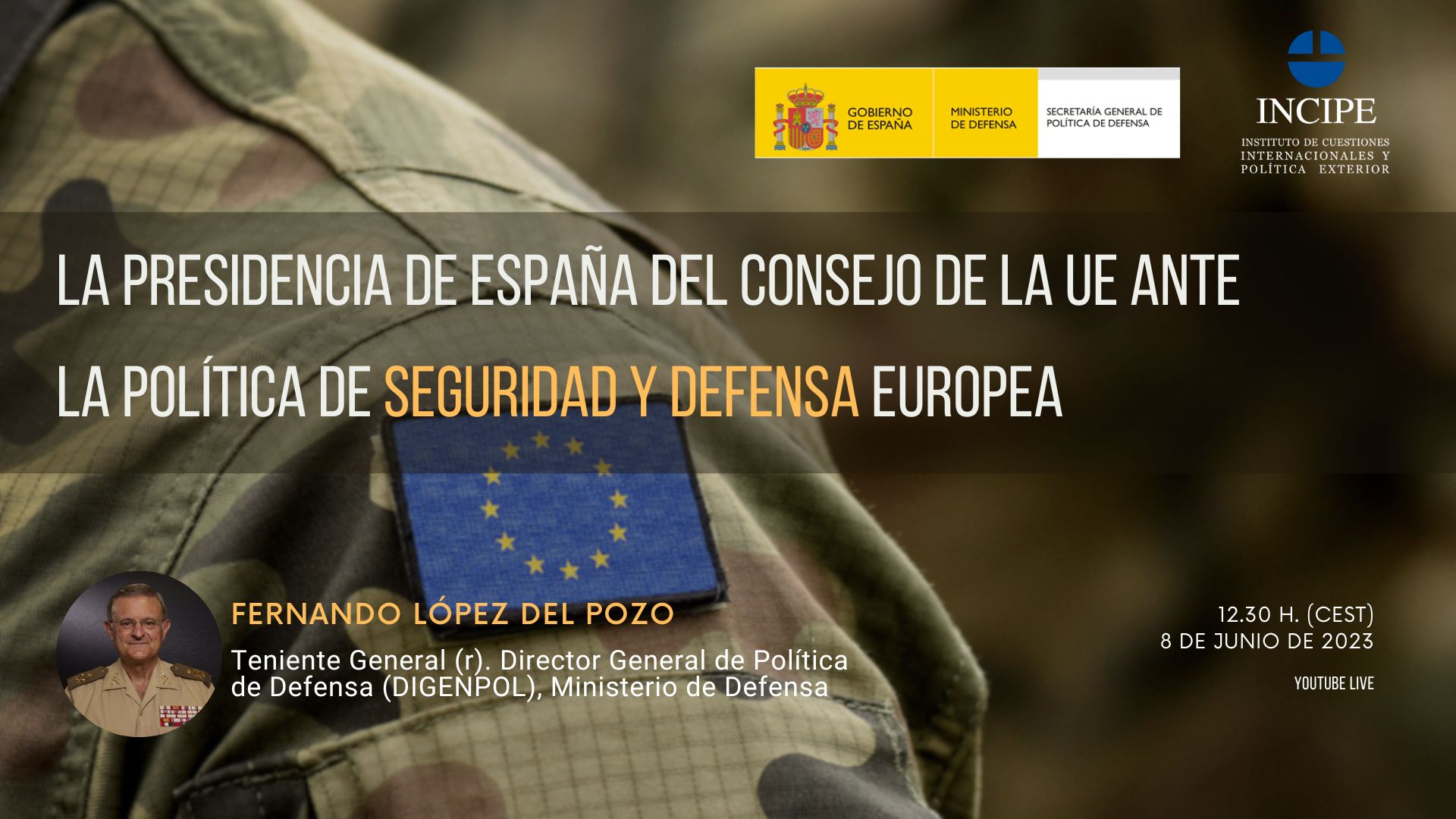
DIGENPOL began his participation by highlighting that the National Defense Directive aims to apply effective multilateralism in external actions. It is important to emphasize this, as multilateralism may gradually be replaced by bilateralism, which has caused problems in various aspects. Similarly, he points out that Spain strongly believes in multilateralism and promotes it. In this regard, the United Nations is maintained as the primary reference in matters of legitimacy. Furthermore, Spain’s leadership in advancing the European Union’s Common Security and Defense Policy is encouraged, while maintaining a clear commitment to NATO as a guarantor of collective defense. This triad is key and always present.
It is a fact that the war in Ukraine has influenced and will continue to influence the defense policies of all European countries, particularly Spain and the entire EU. The invasion’s onset coincided with the publication of the Strategic Compass, which aims to build a common strategic culture among the 27 member states, strengthening unity and solidarity. Additionally, it seeks to enhance the capacity and willingness to work together to protect our interests and values. All this leads to investing more and better in security and defense, with the goal of developing a stronger EU that acts as a “global security provider.”
DIGENPOL details that many of the goals set out in the Strategic Compass are grouped into four fundamental pillars: act, protect, invest, and partner. He notes that many of these objectives must be achieved during the second half of 2023, a period that coincides with Spain’s Presidency of the EU Council. For this reason, the Ministry of Defense has adopted the Strategic Compass as the main reference to develop the Ministry’s program during the Presidency of the Council. Additionally, the Versailles process has been included.
The Ministry of Defense has established a series of priorities, objectives, and events for the second half of 2023, proposed under the principles that Spain has been advocating. Spain’s vision on the ability to act autonomously within the EU stands out, which must be achieved with the following parameters: a credible military force, sufficient resources, and a willingness to act together. The idea of autonomy or strategic responsibility should be the basis of all efforts.
Additionally, DIGENPOL breaks down the priorities of Spain’s Presidency in the EU Council in defense matters, which are divided into four categories with additional implications. These categories are: improving the EU’s capacity to act, ensuring access to global common spaces, advancing the EU’s future agenda, and strengthening ties with Ibero-America. Regarding this last point, Spain seeks to act as a bridge between Ibero-America and Europe, fostering the relationship between NATO and the EU and coordinating actions between both organizations to achieve coherence.
At the end of the session, a debate took place, where participants raised questions on topics such as threats in southern Spain and their relevance to the current agenda, especially in light of the emergency represented by the situation in Ukraine. The discussion also covered maritime security both in Europe and Spain, among other matters.
Danela Bordones