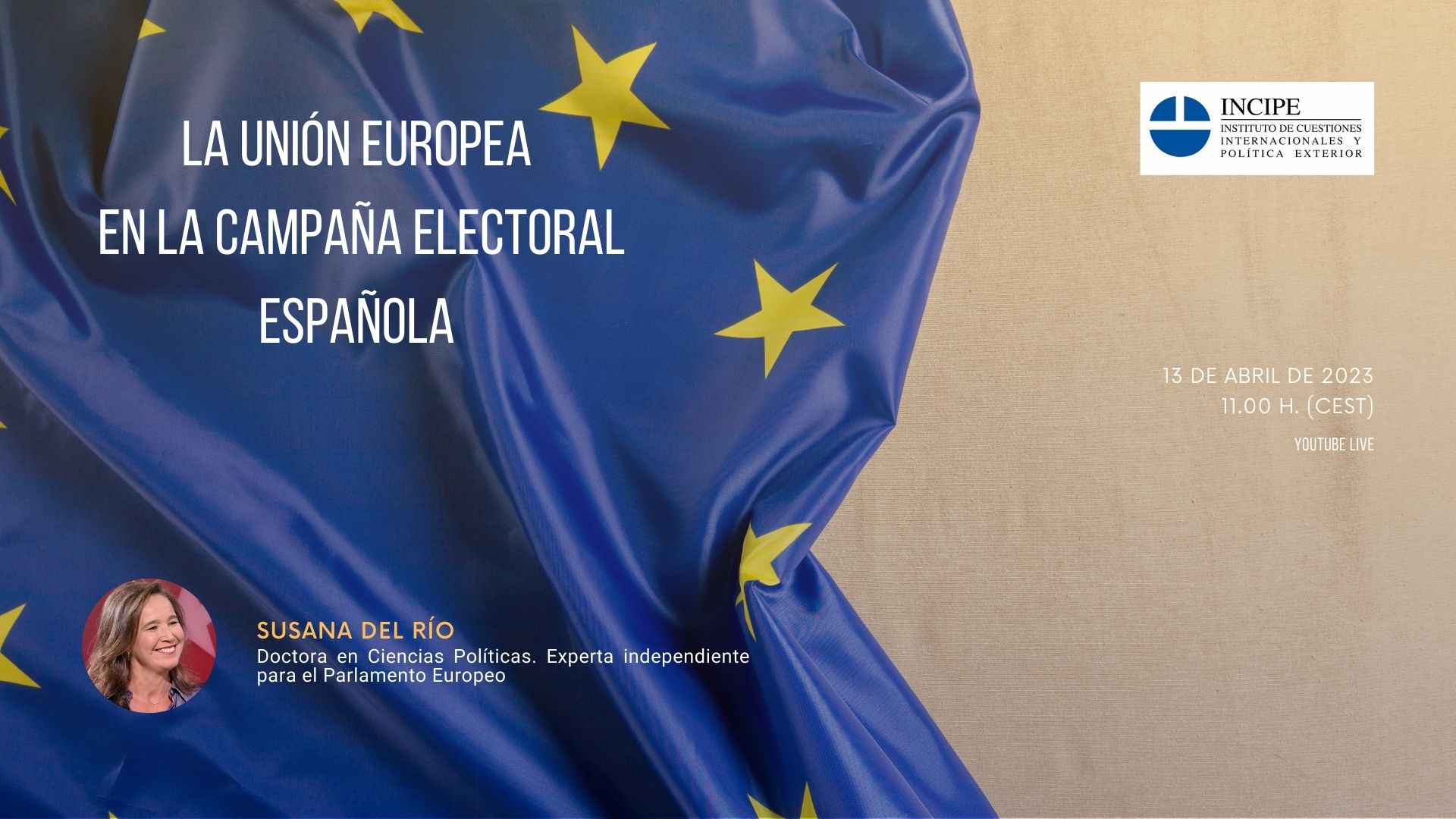
Susana del Río began her speech by stating that all Spanish political parties should look to the European Union as their guiding light, serving as a reference for the direction to take, the path to follow, and the trends to maintain.
At the end of May this year, municipal elections will be held in Spain, along with elections in 12 autonomous communities. Later, at the end of 2023, Spaniards will once again go to the polls for the general elections. Despite the numerous electoral events taking place in the country in the coming months, Susana del Río emphasized that these should not overshadow or diminish the importance of the European Parliament elections. On the contrary, as the European Parliament is our supranational parliament, it stands as the highest exponent of representative democracy.
Additionally, during the second half of 2023, Spain will hold the rotating Presidency of the Council of the European Union. This Presidency represents both a significant opportunity and a responsibility, which should be reflected in electoral campaigns—but not from a partisan perspective. The agenda of the Spanish Presidency is cross-cutting and will finalize negotiations on some of the EU’s major work areas: ecological transition, digital transformation, and the social agenda.
Over the past years, the EU Presidency has played a highly valuable coordinating role in crisis management. Brexit, COVID-19, and the ongoing war in Ukraine have been transformative events, both for EU institutions and for European citizens as a whole, forcing everyone to rethink our identity in order to continue progressing. The coordinated vaccination campaign at the European level was a major success, yet it also highlighted the need for a comprehensive European pharmaceutical strategy.
Moreover, the war in Ukraine has brought to light unresolved EU challenges and the implications of the conflict for European security and defense policy. In this regard, the EU has moved from the European Strategic Compass to European Strategic Autonomy, which encompasses far more than just common European security and defense—it now extends to technological and economic matters as well.
During the discussion following Susana del Río’s presentation, several key issues were raised, including the EU’s sanctions on Russia and their impact on the European economy and energy transition; the Next Generation EU recovery funds; and the European Green Deal, which aims for Europe to become the first climate-neutral continent by 2050.
Danela Bordones
Asistente de comunicación, INCIPE