
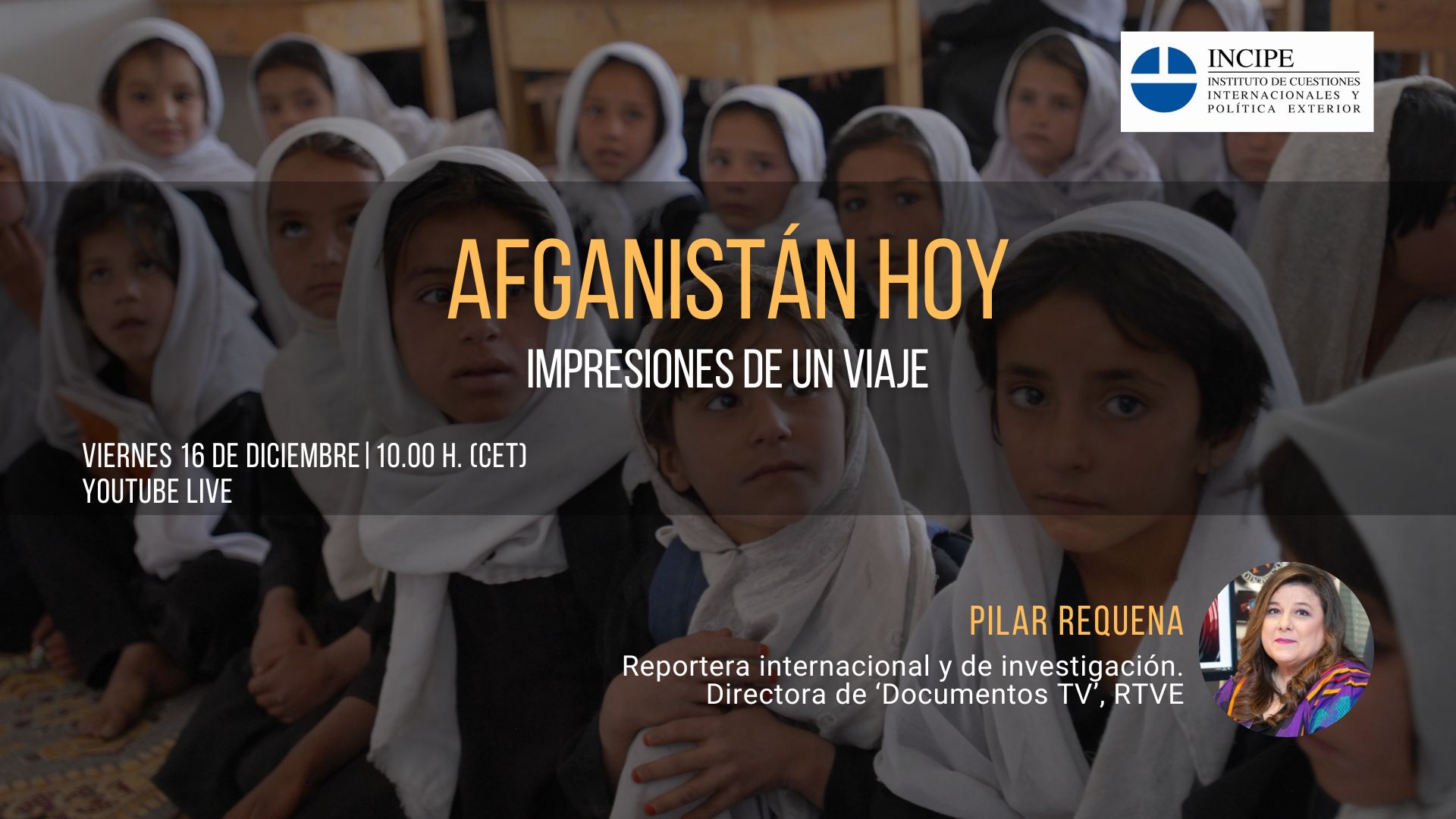
Pilar Requena began her presentation with a brief reflection on her impressions from her first trip to the country since the fall of Kabul and the Taliban’s takeover. With the support of audiovisual sources, she paints the picture of a capital full of life and activity, which contrasts sharply with the previous Taliban regime (1996-2001). In Kabul, there is no longer the sense of an imminent attack. However, she warns that these impressions are only the surface of a very different situation, which becomes clear when one begins to dig deeper. The circumstances in the provinces are much worse than in the Afghan capital. We are faced with a tragic humanitarian situation that, were it not for the presence of the United Nations, would be, in Pilar’s words, «the greatest of hells.»
Among Afghanistan’s major problems, she highlights that more than 60% of the population lives below the poverty line, with increasing rates of diseases like tuberculosis in a precarious healthcare situation, and the prospects of an even harsher winter than the previous one. The situation for women in the capital is less dire than often described, though it remains serious. Many do not wear the burka (nor even the hijab, which is mandatory), except perhaps when collecting humanitarian aid (motivated more by shame than by Islamic law), and some walk alone. Pilar tells us that the Taliban are not strictly enforcing the official dress code for women, allowing a margin in the capital that many women use to preserve their previous freedoms. However, around 80%-90% of them are depressed due to the changes in their lives, condemned to ostracism in both the workplace and education. Despite the fear, many of them continue to work and study clandestinely, with a strong sense of sisterhood, activism, and mutual support. In other words, a strong inclination to reclaim their space of freedom.
Regarding Taliban ideology, and drawing on the opinions of many analysts, Pilar assures us that it has not changed, despite the more open and friendly face shown by those who serve as a façade to the outside world. In other words, they have merely learned political and dialogical practice with international visitors. One cannot attempt to undermine their unity. While there are differences on issues such as women’s education, their work in certain positions, or the implementation of Sharia, what prevails is absolute loyalty to the Taliban leadership in Kandahar. This hardline faction, unchanged from the 1990s, remains isolated from the developments in the capital and Afghan society. It is when one engages with experts, activists, and people in hiding that the reality of persecutions, kidnappings, and disappearances becomes apparent. Any concession is framed in terms of their attempt to open negotiations. The regime aspires to international recognition and foreign economic aid to ensure the viability of its situation. They cannot ignore the remnants of a society that has changed and now seeks economic viability and a future.
According to Requena, no one desires a return to conflict or the return to power of the warlords. The Taliban do not want this either, as they now enjoy a rebuilt Kabul, something they did not achieve the last time, where the only real and violent enemy is ISIS. The negotiation they aspire to could culminate in an authoritarian government, but not a monolithic one, where representatives of different ethnic groups could have a voice. She concludes that the Taliban are here to stay, feeling comfortable in power, aiming for the thawing of Afghan state funds and, if not legal recognition, at least de facto recognition from the international community. Finally, she leaves us with a question: How possible will this be without a real commitment to change?
Sofía Provencio
Communication Assistant, INCIPE