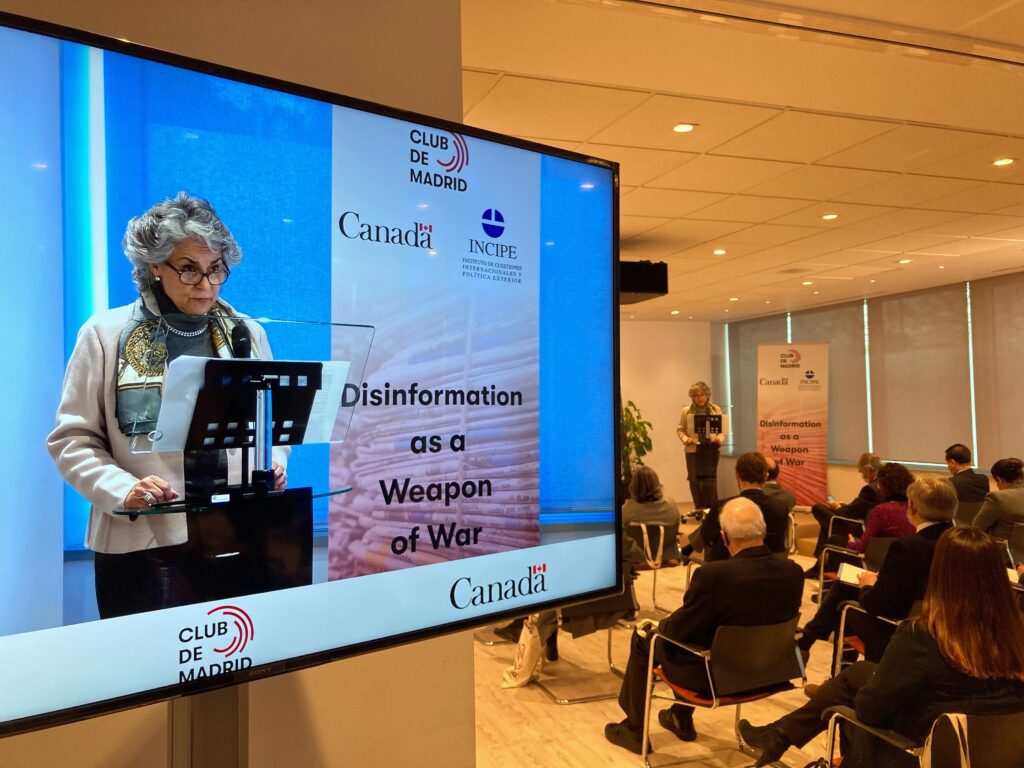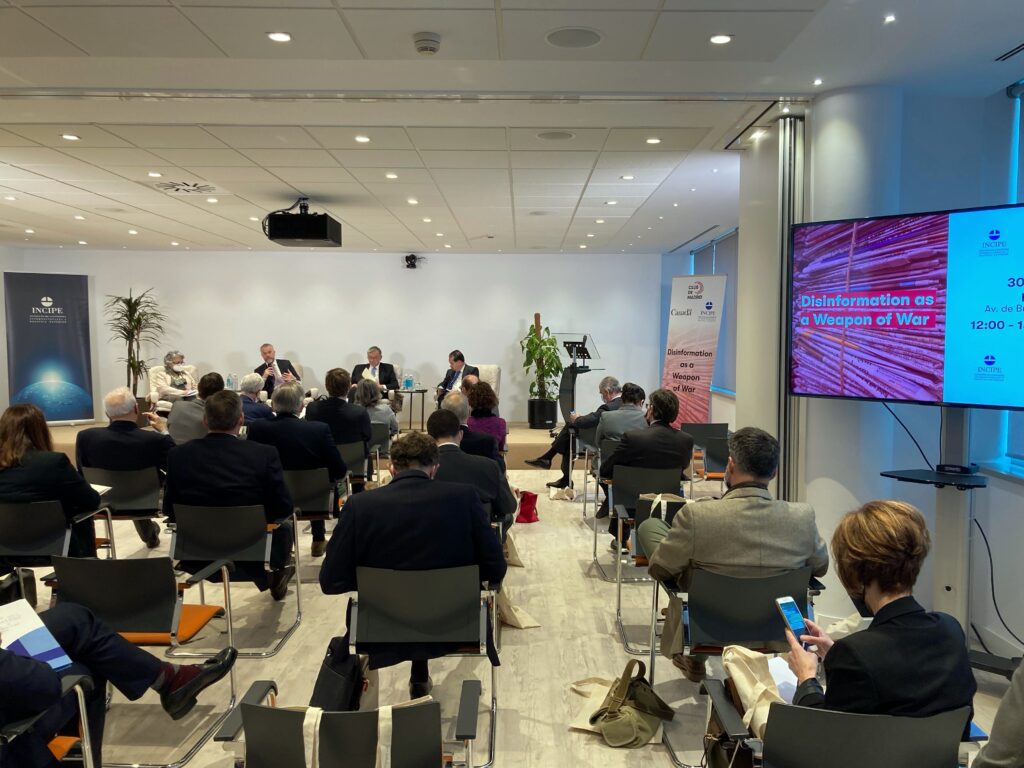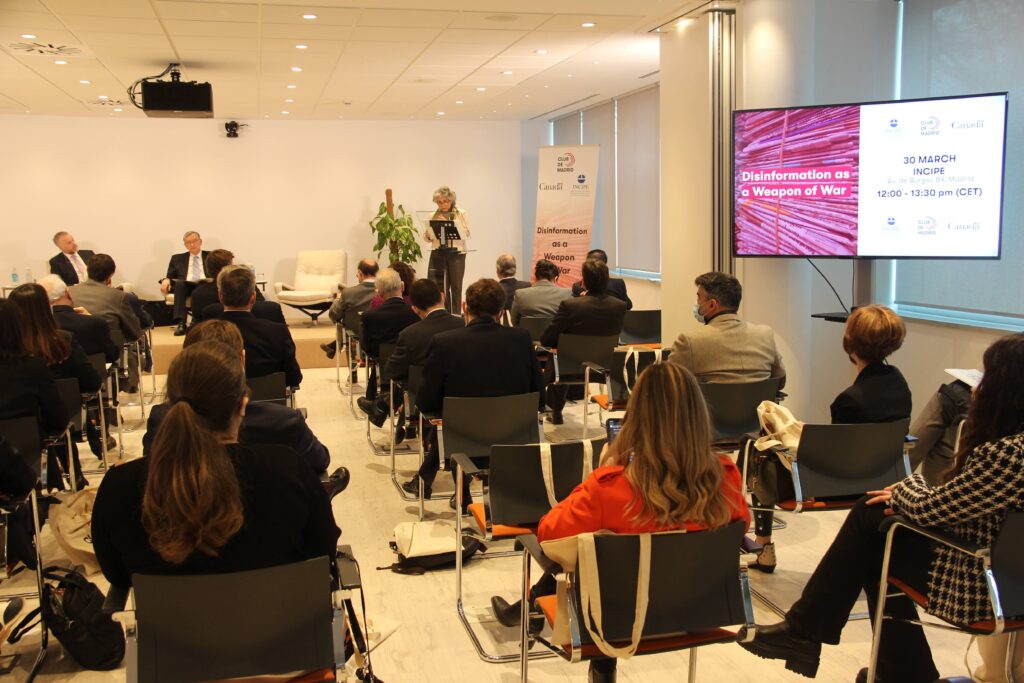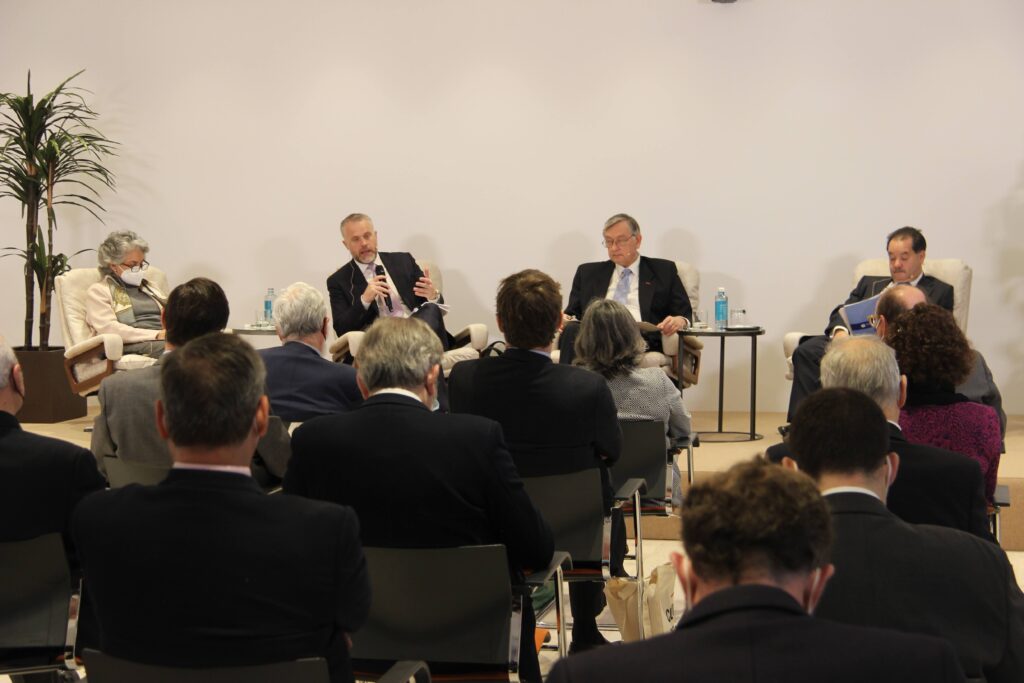

Peter Loewen was the first to speak, citing academic research that examines how disinformation enters the Canadian communication ecosystem, how it is consumed by citizens, and how it has affected them. To explain this, he highlighted two key aspects.
First, disinformation can come from various sources, one of which is foreign governments. However, the most significant factor is the demand-driven market for disinformation. In this market, websites focus on topics that generate the highest profits, such as COVID-19 or the war in Ukraine. The second point emphasizes the need to recognize that disinformation arises from an exchange of ideas between individuals. To counter it, solutions cannot be purely technical; the human aspect must also be considered, as individuals are the ones who share ideas and decide which sources of information to trust. One of the reasons people consume disinformation is a lack of trust in governments, the media, and institutions.
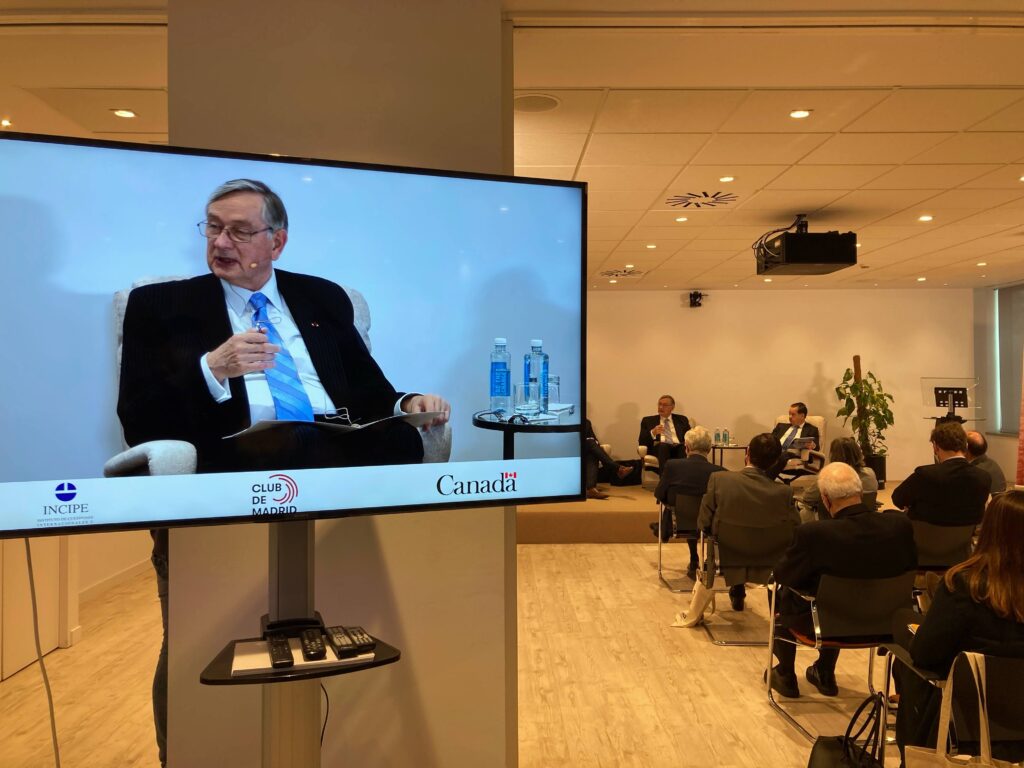
Danilo Türk, current President of the Club de Madrid, described disinformation as a traditional weapon of war, noting that it was already used during the Napoleonic Wars. He pointed out that citizens are both consumers and participants in disinformation processes, making it more challenging to determine whether there is an intentional strategy behind them. He referred to this as micro-targeting. Türk questioned whether disinformation is a tool of cyberwarfare and, if so, what comes next, how we should respond, and in what way. From his perspective, think tanks must play a key role by providing tools to combat disinformation.
To conclude, Türk stressed the importance of drafting a consensus-based document among states to promote self-regulation and accountability in cyberspace, as this would serve as the foundation for future regulations.
Following the speakers’ presentations, Mª Elena Agüero, Secretary General of the Club de Madrid, opened the debate. Among other topics, the discussion focused on leadership and democracy—two key factors that both speakers highlighted as essential to restoring citizens’ trust in political leaders.
Marta Herranz
Communication Assistant, INCIPE