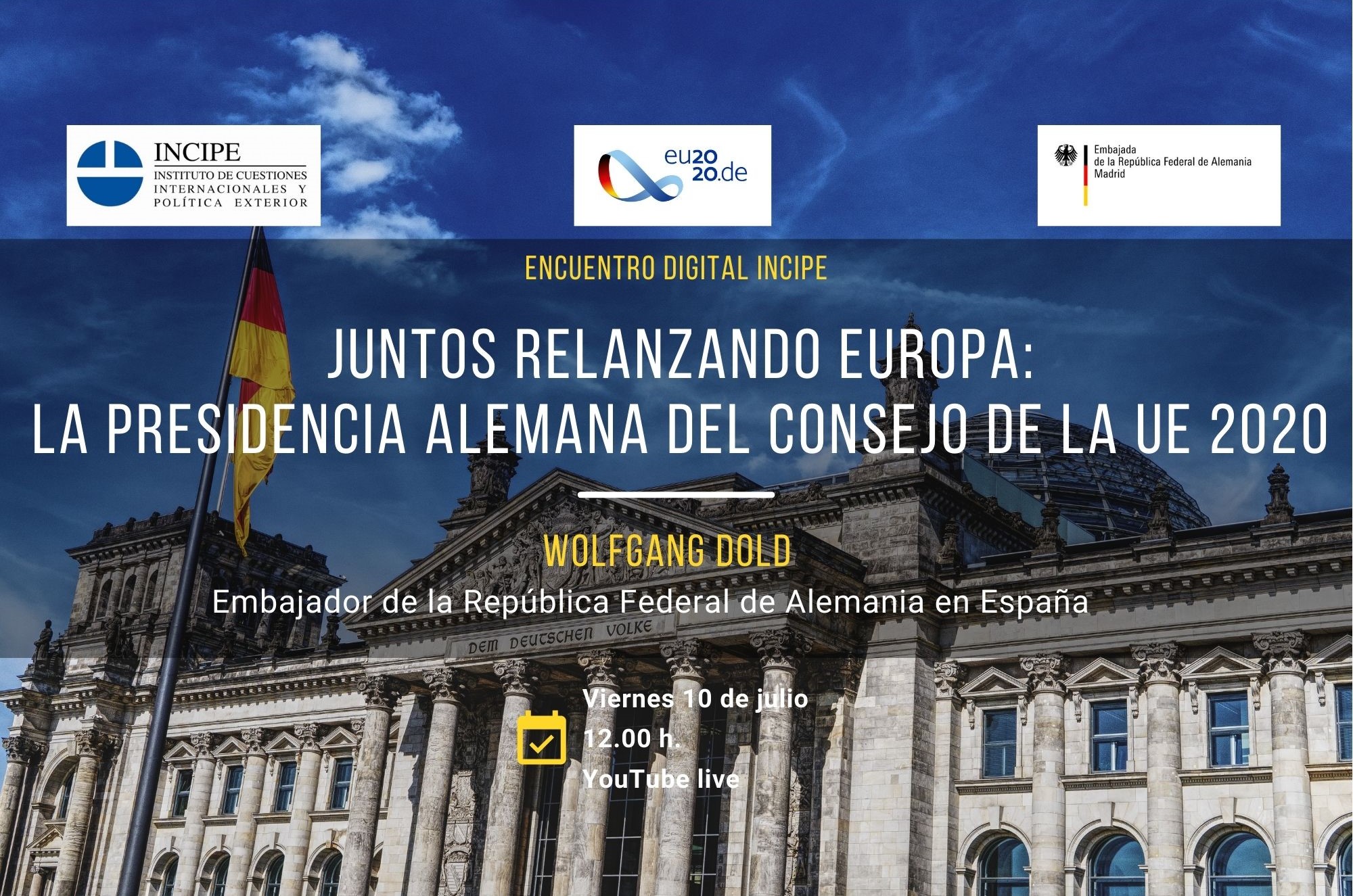
When Germany began preparing the program for its presidency nearly two years ago, it could not have imagined that its efforts would need to focus on a single major issue. However, overcoming the COVID-19 crisis has become, since last March, the central international challenge around which the objectives of Germany’s presidency of the EU Council revolve, under the slogan «Together Relaunching Europe».
Germany’s goal for the six months of its presidency is to face this historically significant challenge by taking measures that allow the EU to emerge from this crisis stronger, more resilient, and more united. Specifically, the priorities are to continue stabilizing the health situation, coordinate measures to overcome the crisis, vigorously push for economic recovery, and strengthen social cohesion. To achieve this, Germany will work to secure a political agreement on the Reconstruction Fund and the upcoming multiannual financial framework, appealing to solidarity, pragmatism, and a spirit of compromise to bridge the differences between the Member States.
In addition, Germany aims to go beyond crisis recovery measures by taking advantage of the profound changes we are experiencing globally to leave behind the pre-pandemic ways of working and producing, especially in three areas. The first of these is commitment to the environment. Germany’s goal is to find a common position among Member States on a Climate Protection Law that gives legal force to the common commitment to energy neutrality.
Progress in the digital realm will also be sought, by strengthening the EU’s digital and technological sovereignty, enabling it to decide in which technological sectors it wants to be independent from others.
Finally, the EU must assume its international responsibilities. The Ambassador recalls that «COVID-19 can only be defeated through close international cooperation and coordination.» Therefore, Germany will work during its presidency to strengthen multilateral institutions, cooperate with key international actors, and provide the necessary resources to overcome this crisis. He particularly mentions the need to support the African continent and the Western Balkans in the fight against COVID-19, as well as intensifying cooperation with China and actively committing to the principle of reciprocity in all political areas.
Another issue of the German presidency will be the relationship between the United Kingdom and the EU. The goal is to successfully manage relations between both parties and establish an agreement that creates the closest possible economic and political ties without compromising the EU’s legal and institutional framework, especially the internal market. At the same time, Germany is preparing for a potential “no-deal” scenario with the United Kingdom, minimizing its effects—an outcome that the Ambassador describes as «absolutely undesirable, but one for which it is important to be prepared.»
Sofía Alfayate
Communication Assistant, INCIPE