Until a few years ago, most of the threats surrounding us were of a conventional nature. However, technological and scientific advancements from the mid-20th century to today have led to the emergence of multiple types of threats, culminating in the acronym CBRN, which stands for «nuclear, radiological, biological, and chemical.» CBRN threats have two origins: intentional or accidental. The intentional origin is related to terrorism and the consequences of the current hybrid warfare. The accidental origin corresponds to the spread of emerging diseases in the form of viruses and bacteria.
Among all these threats, the nuclear threat finds its greatest expression in Hiroshima in 1945, where 100,000 people died, and another 100,000 were injured. The catastrophe was so immense that it was concluded there was, and will be, no adequate healthcare response to the nuclear holocaust. Historically, the subsequent application of Mutually Assured Destruction (MAD) and the events of Chernobyl and Fukushima, along with the use of dirty bombs, have opened multiple debates on possible responses to nuclear threats.
On the other hand, chemical threats come from a wide variety of agents. These include lethal agents, incapacitating agents, phytotoxic agents, incendiaries, and smoke-producing agents. These threats caused significant losses during both World War I and World War II, and the last attack that sparked global panic and mobilization occurred in 1995 in the Tokyo subway. Two relevant concepts when dealing with biological threats are: biological warfare, or the use of microorganisms and derived substances for military purposes; and bioterrorism, which is the use of these substances against populations to create panic and terror. The main biological agents and emerging diseases, as mentioned earlier, appear in the form of viruses (such as Ebola, Crimean-Congo, or more recently, coronavirus) and bacteria like anthrax, plague, Q fever, or any mutated microorganism. The transmission routes for these diseases are insects, contact, food, water, or airborne.
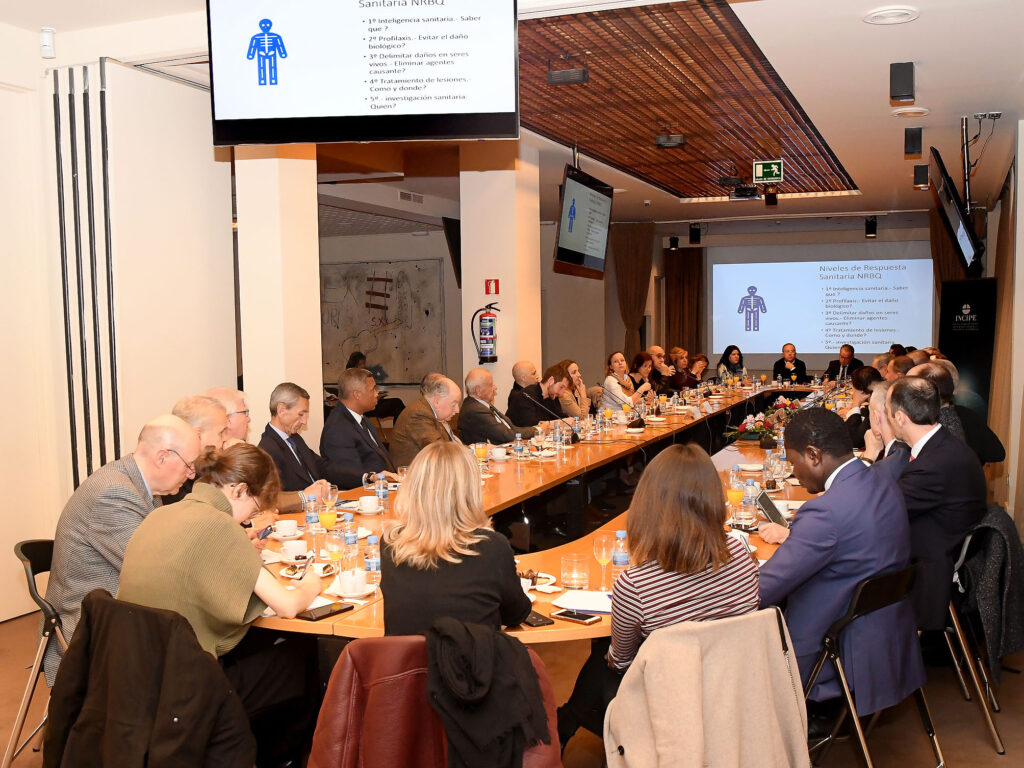
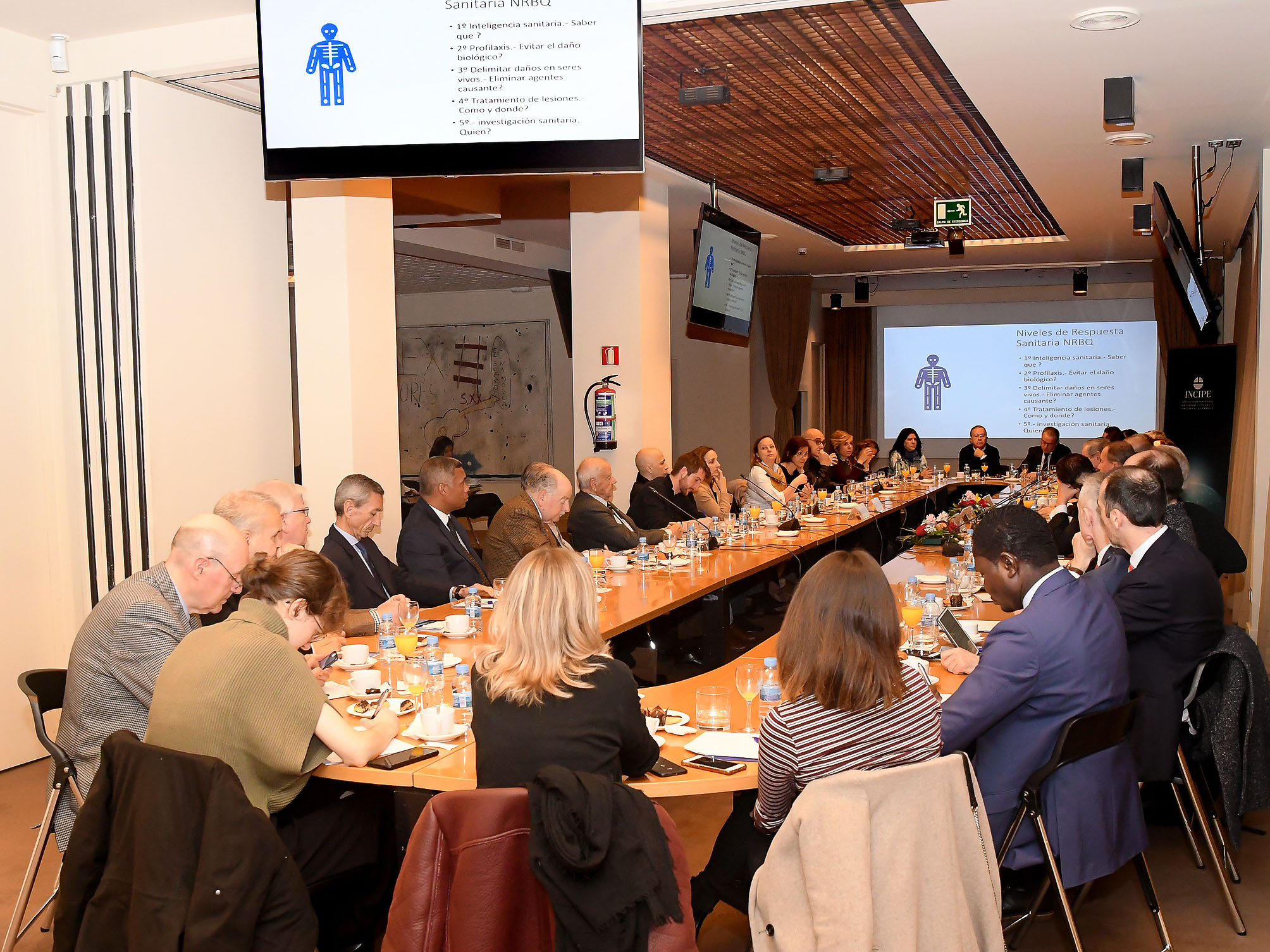
Additionally, the military CBRN threat is very low on national territory, though in operational zones, it depends on the specific area. The terrorist threat, on the other hand, is only high in the radiological case. In any case, there are five levels of healthcare response to CBRN threats. On one hand, there is health intelligence, which aims to share intelligence from military, civilian, and even international institutions to later develop prevention strategies. Once knowledge of the events begins to spread, prophylaxis comes into play, promoting the production and storage of antidotes and products to minimize or prevent damage, as well as controlling vectors and detecting germs. The third level involves limiting damage to living beings through isolation of the focus, and at the fourth and fifth levels, healthcare treatment and research are addressed, respectively.
Looking to the future, the following areas of work will focus on completing the CBRN healthcare unit, especially in the nuclear treatment area, training Rapid Deployable Outbreak Investigation Teams (RDOIT), the evolution of the military pharmacy concept, and the consolidation of the National Biosafety Commission.
Nicole Pretell
Communication Assistant, INCIPE