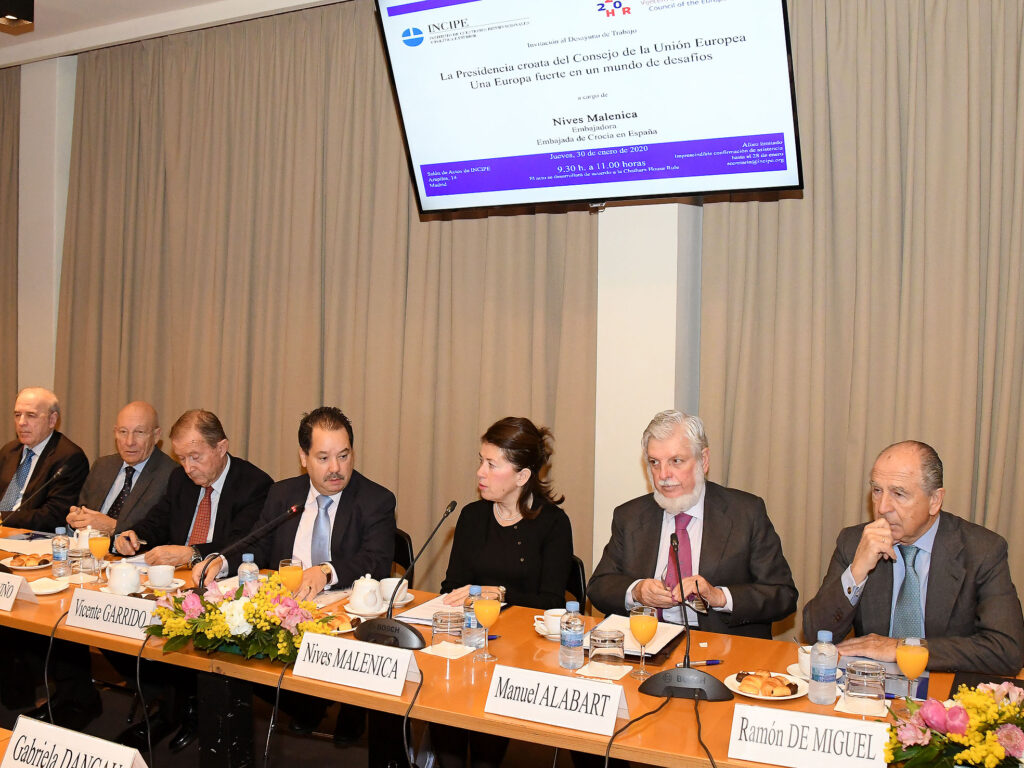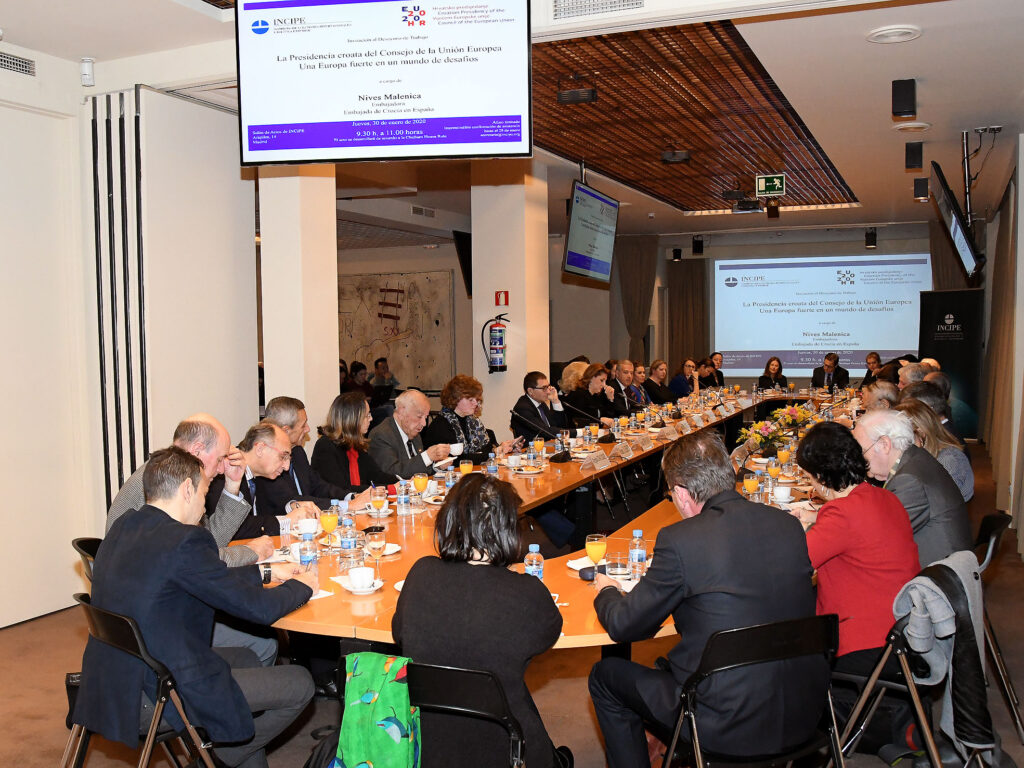
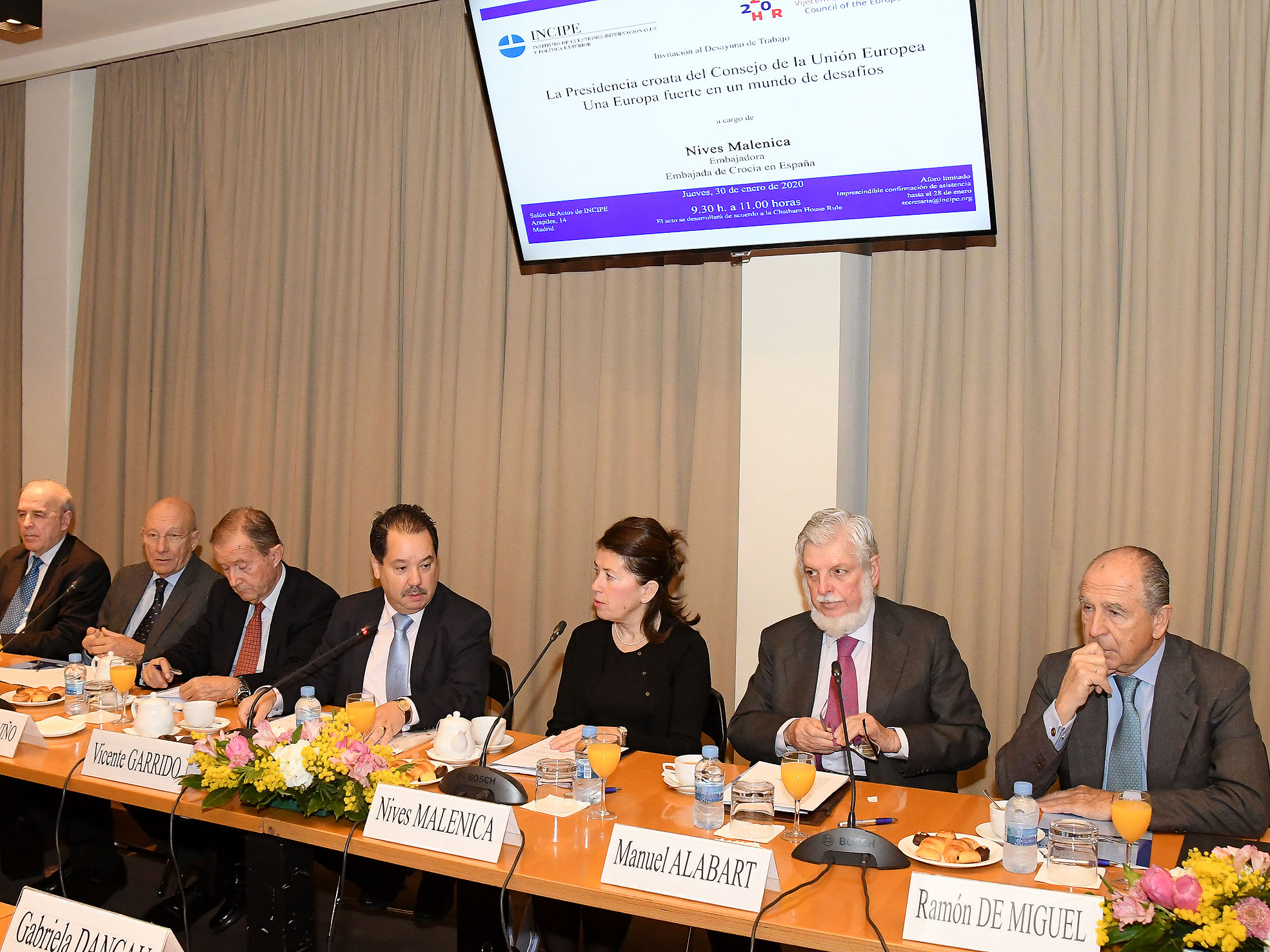
On January 1, 2020, Croatia assumed the Presidency of the Council of the European Union for the first time since its accession in 2013. This Presidency marks the conclusion of a recognition cycle that has lasted three decades of political, economic, and social transition for Croatia. With six months ahead, the Croatian Presidency arrives at a crucial time for the European Union, especially due to two milestones: the beginning of a new institutional and legislative cycle—with the corresponding reshuffling of European institutions—and the United Kingdom’s withdrawal from the European Union. On a general level, challenges such as inequality in economic development, increased migration, waves of misinformation, climate change, and the rise of populism are other issues to which the European Union seeks to respond with a strong and cohesive approach.
Thus, with these objectives in mind, Croatia will focus on interinstitutional dialogue as a key tool to achieve unity among Member States. Evidence of this is the 165 events to be held in Zagreb, the 52 outside the capital, and over 1,400 meetings expected to be convened in Brussels. As priorities, the Croatian Presidency will focus on achieving the goals set out in the 2019-2024 Strategic Agenda, its own national interests, the objectives agreed upon in the presidential trio shared with Romania and Finland—its predecessors in 2019—and the commencement of negotiations following the United Kingdom’s departure.
To this end, Croatia has built its presidential program around the slogan: «A strong Europe in a world of challenges.» It will focus its efforts on achieving «a Europe that prospers, connects, protects, and influences.» To reach this programmatic goal, Croatia proposes steering the single market towards investment in R&D, digitization, and the development of new skills for future job positions. Likewise, it will support policies that improve the quality of life; new regulations to protect the environment, and reverse demographic decline, are some examples of this. Other policies aimed at improving the EU’s connectivity will strengthen infrastructure, digital networks, telecommunications, and transportation across the continent.
On the other hand, ensuring a free, secure, and just Europe has become one of the most important priorities at the European level. A more effective control of external borders, as well as reaching a more sustainable agreement on the European Common Asylum System (CEAS), are key proposals promoted by the Croatian program. Finally, Croatia advocates for an influential Europe, whose leadership sets it apart as a global actor. According to the Croatian Presidency, the only way to achieve this is through more active multilateralism. The rigorous implementation of the 2030 Agenda, the continuous promotion of European values and interests, and closer cooperation with NATO are key instruments for this mission.
Finally, the program places special emphasis on relations with neighboring countries, particularly the Western Balkans. The Croatian Presidency will work for a stable and secure enlargement policy that promotes economic development and regional cooperation with Southeast Europe.
Nicole Pretell
Communication Assistant, INCIPE