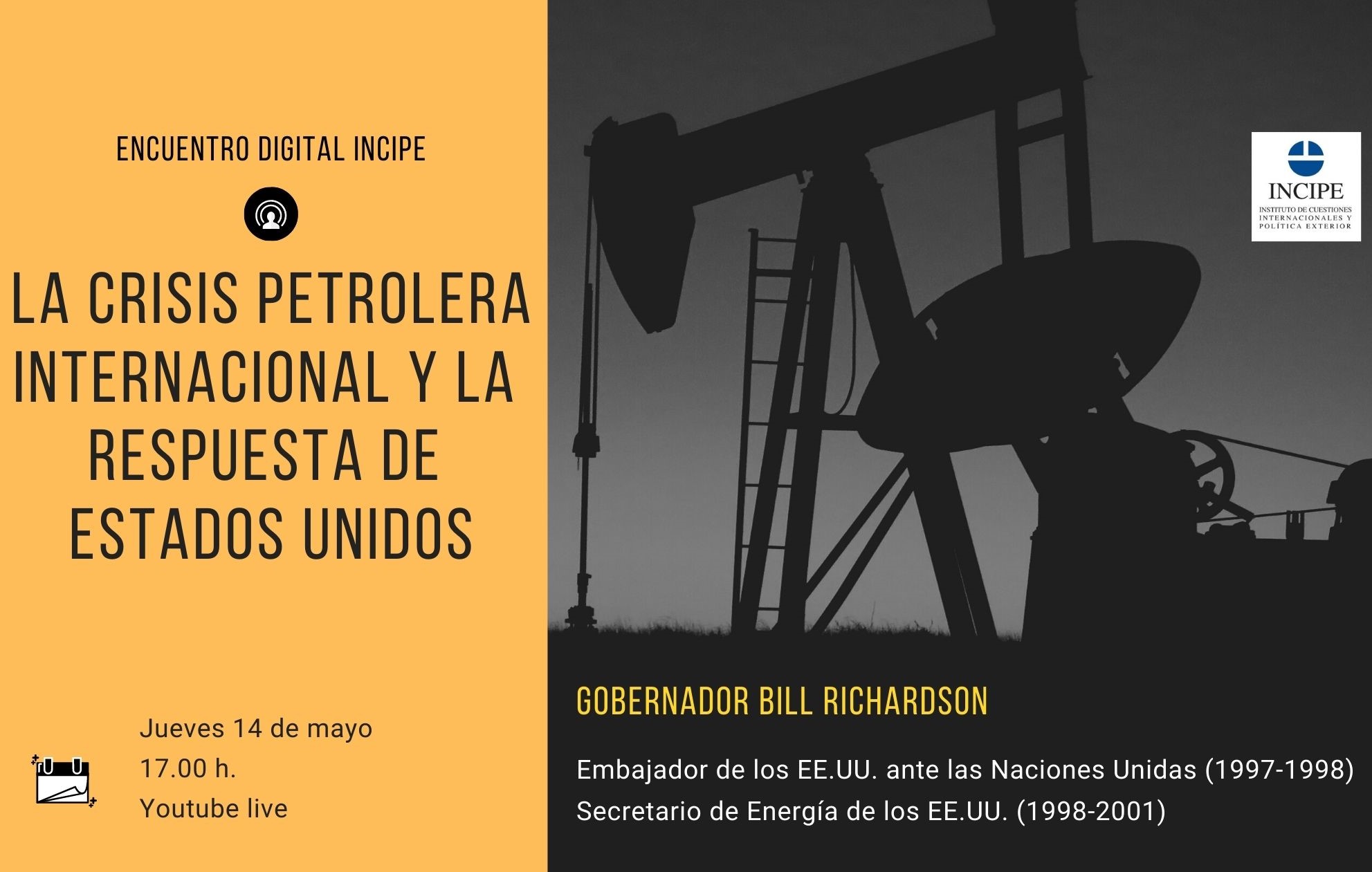
The session was conducted in Spanish and brought together an audience interested in understanding the United States’ stance on the effects of the oil crisis on its industry. For this purpose, we had the participation of Governor Bill Richardson, U.S. Ambassador to the United Nations (1997-1998) and U.S. Secretary of Energy (1998-2001). During the session, Bill Richardson provided a detailed analysis of the factors that led to the outbreak of the oil crisis. The case of the U.S. was particularly highlighted, explaining the main responses from the government to mitigate the effects of the crisis on its oil industry.
The speaker began his intervention by providing context to the current oil crisis, marked by the historic collapse of crude oil prices to negative values on April 20, 2020. This phenomenon was the result of several factors: the shale industry revolution in the United States, which turned the country into a net exporter; tensions within OPEC+, especially between Saudi Arabia and Russia; and the price reductions that affected major producers since 2014. The arrival of the COVID-19 pandemic accelerated the collapse triggered by these initial factors.
According to Richardson, the shale oil boom brought benefits to global consumers and allowed the U.S. to project an image of energy independence. However, the lockdown triggered by the pandemic sank demand, leading to the closure of markets. Additionally, the speaker points out that while countries like the U.S. face significant difficulties, Saudi Arabia is positioned as the most prepared to emerge stronger from the pandemic in economic, political, and geopolitical terms, due to its solid fiscal reserves and high capacity for debt.
President Donald Trump has sought to implement measures to mitigate this crisis, such as the proposal to purchase oil for the country’s strategic reserve, which was ultimately rejected by Congress. Furthermore, Trump attempted to restore mediation between Saudi Arabia and Russia to reinstate agreements within OPEC+. The idea of providing loans to the oil industry through the Federal Reserve was also proposed. The speaker emphasizes that the solutions proposed by the U.S. government were temporary and did not address the structural vulnerabilities of the shale industry in the global market.
Finally, the speaker highlighted the uncertainties surrounding the future of the U.S. oil industry. While the lifting of the lockdown could reactivate gasoline demand and thus ease the current oil crisis, factors such as the rise of renewable energy raise questions about the long-term viability of shale oil.
The session concluded with a debate in which participants could ask questions about the topics discussed. This exchange emphasized the importance of understanding the current position of the U.S. oil industry in the face of the crisis and its long-term consequences.
Lucía Rodríguez
Communication Assistant, INCIPE