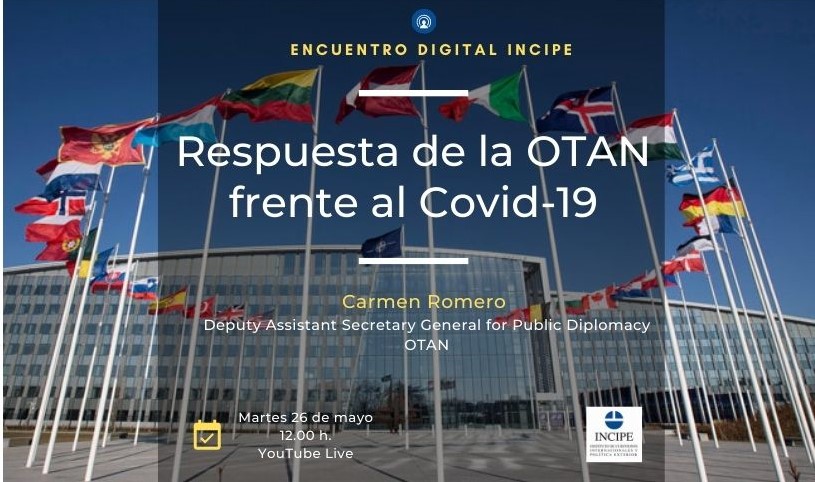
The session was conducted in Spanish and brought together an audience interested in understanding NATO’s actions in response to the coronavirus crisis. For this, we had the participation of Carmen Romero, Deputy Assistant Secretary General for Public Diplomacy at NATO. During the session, Carmen Romero provided a detailed analysis of NATO’s adaptation measures to the pandemic, not only to ensure its traditional operations but also to facilitate crisis management.
Carmen Romero emphasized how NATO has once again demonstrated its ability to adapt to security challenges, this time in response to the COVID-19 health crisis. The Atlantic Alliance has maintained its primary mandate, ensuring the security of the populations of its member countries, while also acting as a space for solidarity. Through its Disaster Response Coordination Center, NATO has coordinated actions to support allied countries, mobilizing resources and facilitating air transportation of medical supplies to quickly respond to the needs of each member. Furthermore, NATO has extended its support beyond member countries, providing assistance to strategic partners such as Afghanistan and the Western Balkans.
Romero pointed out that this response has also included logistical innovations such as the development of ventilators through 3D printing. She also highlighted that NATO has taken preventive measures to ensure the protection of military personnel deployed on its missions, adapting to ensure that the health crisis does not lead to a security crisis. Thus, NATO has managed to maintain its collective defense and counterterrorism missions without interruptions.
Finally, Carmen Romero emphasized the importance of preparing for future crises of this nature, with the goal of avoiding having to choose between managing security crises and health emergencies. The COVID-19 experience underscores the need for proactive planning to address complex threats on all fronts.
The session concluded with a debate where participants had the opportunity to ask questions about the topics discussed. This exchange highlighted the relevance of understanding NATO’s role in managing the COVID-19 crisis.
Lucía Rodríguez
Communication Assistant, INCIPE