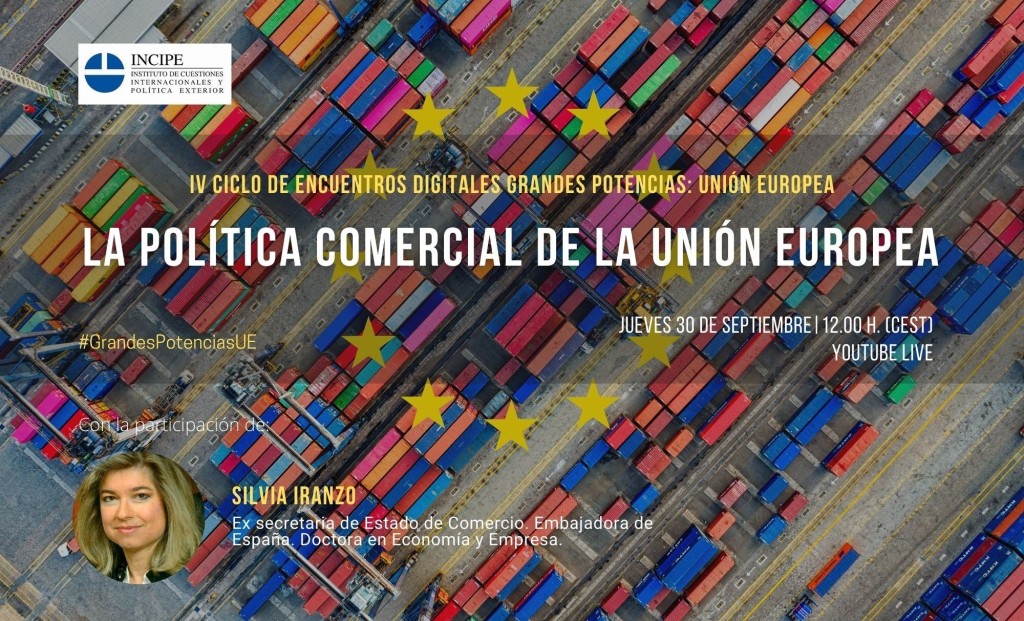
Silvia Iranzo begins by providing an overview of the European Union’s trade policy, which covers all rules related to trade exchanges, public procurement, intellectual property, and foreign direct investment. The former Secretary of State for Trade emphasized the essential nature of this policy, as 90% of future global economic growth will come from regions outside the European Union, making it crucial to seize the opportunities offered in other areas.
The trade policy of the European Union is an exclusive competence of the Union, according to the treaties governing it. However, Silvia Iranzo discusses the nuances of this exclusivity. As agreements have incorporated political aspects that were previously not covered, such as the protection of human rights, migration, labor, social, and environmental issues, it has become more common for these to be mixed competences, requiring approval from national and even regional parliaments. She also highlights the recent sophistication and complexity of negotiating these agreements, recalling the CETA agreement between the European Union and Canada, which took seven years to complete.
Silvia Iranzo lists some of the agreements successfully signed with countries and regions around the world, but also reminds of others that have failed or are still awaiting ratification, such as the agreement with MERCOSUR, which was blocked due to environmental concerns. The EU-China Investment Agreement is also still pending, addressing concerns such as improper technology transfers or disrespect for intellectual property.
To conclude, Silvia Iranzo evaluates European trade policy as successful. However, she points out various challenges it faces, including reluctance to increase interconnectedness in the context of globalization, undefined relations with China, the aftermath of Trump’s policies, the need for constructive collaboration with Biden, and the improvement of the communication policy for trade agreements to alleviate the negative reactions they often receive.
María de Alfonso
Communication Assistant, INCIPE