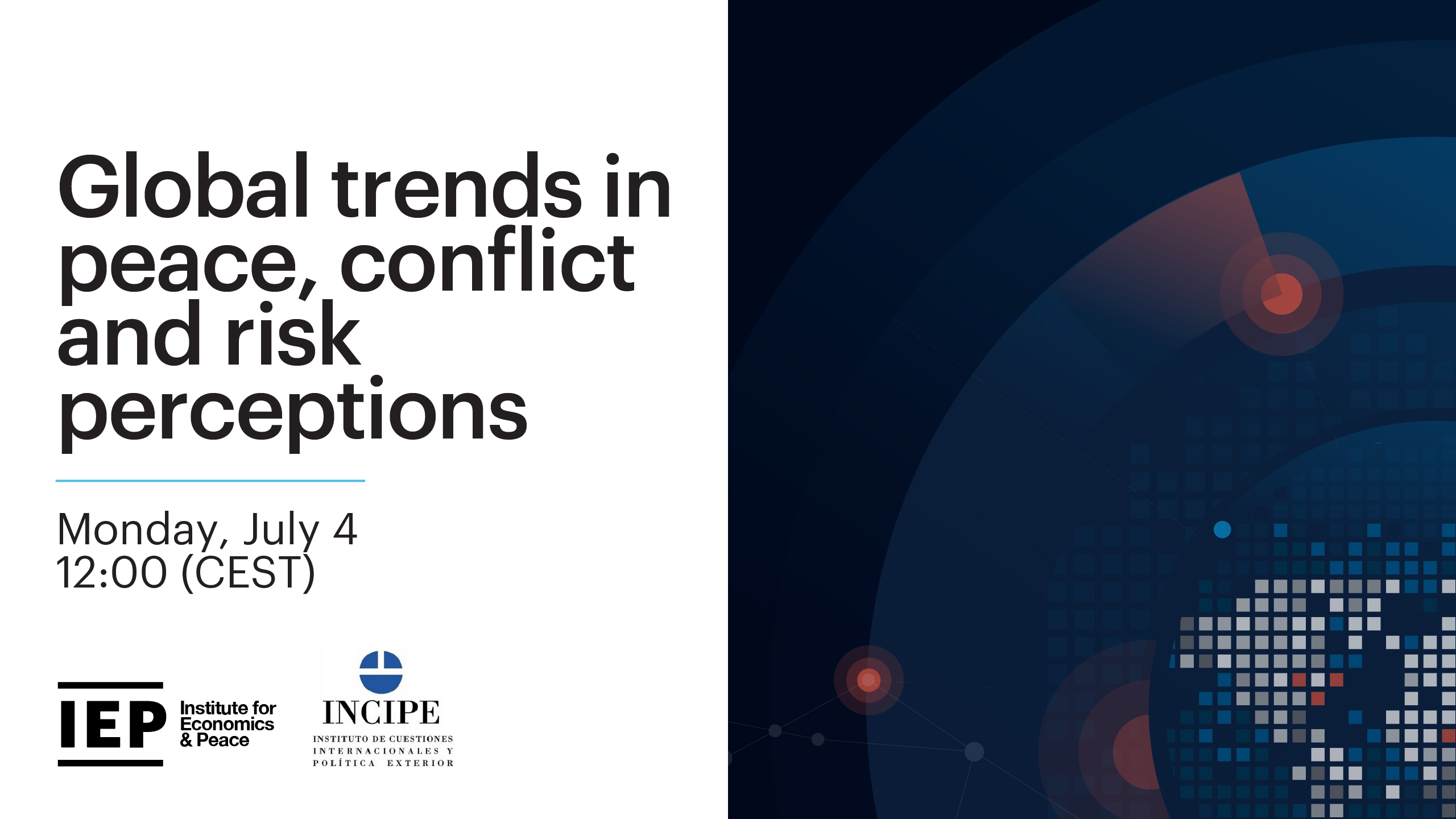
The 16th edition of the Global Peace Index is marked by the context of war in Europe and its effects at both the regional and global levels. For this reason, this year’s report not only compiles data on global peace perspectives for 2022 but also measures the impact of the war in Ukraine on these perspectives.
For all these reasons, Serge Stroobants divides his presentation into four key points: the war in Ukraine and its effects on peace perspectives, key findings for the Global Peace Index, trends in peace levels, and finally, the economic value of peace.
First, it is important to highlight the significant shift in public opinion in Ukraine regarding peace and security levels. Before the conflict, research showed that citizens felt some optimism about Ukraine’s future. However, this year’s report presents data that confirms Ukraine has suffered significant deterioration as a country.
Stroobants also addresses the impact of the war in Ukraine, including rising inflation, supply chain shortages, and the food crisis, mentioning the blockade of Ukrainian ports in the Black Sea that prevents grain exports. Additionally, he points out the approximate 7% increase in military spending that NATO members are expected to carry out as a result of the conflict.
Regarding global peace levels, Serge Stroobants highlights a concerning statistic: the average global peace level of countries has deteriorated by 0.3% compared to the previous year, marking the eleventh decline and the lowest peace level in the last 14 years. Stroobants states, “The level of peace has worsened due to the increase in the number of refugees and internally displaced persons, data on the scale of political terror, and the deterioration of good relations between neighboring countries.” Still, Iceland remains the most peaceful country. On the other hand, Afghanistan, despite the government creating a form of stability in the country, ranks at the bottom of the list.
Global aspects of international relations have changed. From a liberal approach based on collaboration, there has been a shift towards a more realistic approach that bases international relations on a form of competition. This is why the Global Peace Index does not show any signs of a shift toward a more peaceful future.
Given these data, Serge Stroobants encourages states to break the vicious cycle created by investing in violence, which only generates more violence. Instead, efforts should focus on creating a virtuous cycle that invests in increasing positive peace levels: “We know what our problems are, we know where we need to invest, and what attitudes we need to change. There is a way out of this negative spiral.”
Judit Anidjar
Communication Assistant, INCIPE