
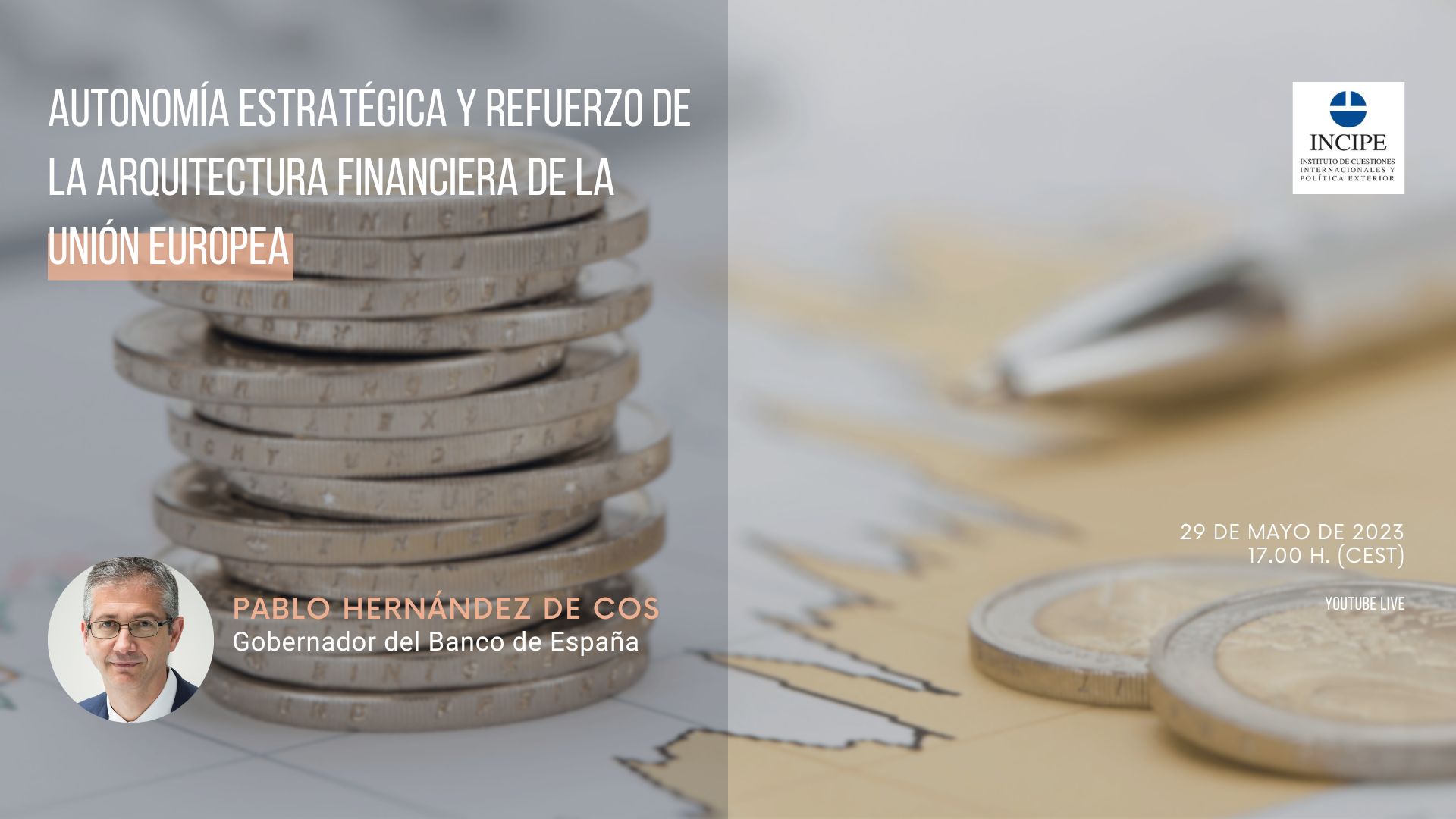
The Governor of the Bank of Spain began his speech by highlighting the effects of globalization, a topic of great importance for highly open economies, such as Spain’s and, more generally, Europe’s. Since 2020, two extraordinary disruptions have occurred: the pandemic and Russia’s invasion of Ukraine, creating enormous uncertainty.
When these factors are added to the trade tensions between China and the United States, new questions arise about the future of globalization and the importance of geopolitical factors in shaping international economic relations. This affects not only the activity of governments but also that of businesses. This scenario is particularly important for Europe due to the EU’s high degree of commercial and financial openness, much greater than that of other geopolitical powers such as the U.S. and China. Data from 2019 clearly shows this: the share of foreign trade in the euro area reached 54% of our GDP, compared to 31% in 1999.
While it is agreed that this increase in the openness of the European economy has been an advantage, it has also become a vulnerability in the current global geopolitical environment, as described at the beginning.
Hernández de Cos poses the following question: “What vulnerabilities are observed as a result of this high degree of integration?” He points out that there are at least four significant vulnerabilities when analyzing the Union’s data. The first is the dependence on industrial imports from China. He also notes that the EU depends on third countries for semiconductor production. European companies involved in the manufacturing of these products are almost exclusively concentrated in the initial stages of the production chain, supplying high-purity equipment and materials. However, these companies represent a negligible proportion in other critical phases of the production chain and also have a high dependence on external suppliers. Almost 80% of the suppliers to European semiconductor companies are outside the EU.
Hernández de Cos adds that a transition to a greener economy could significantly reduce these external dependencies. It is estimated that meeting the goals set in this area could reduce dependencies from the current 60% to just 10% by 2050. However, this transition requires critical raw materials such as rare earths, cobalt, and palladium.
Other aspects the Governor highlights include the concentration of exports and foreign direct investments, as the EU’s main investment partners are other advanced economies.
During the Q&A session, the Governor of the Bank of Spain extensively addressed the issues raised by the audience, discussing various topics related to the country’s monetary policy, inflation, and deflation. He also predicted that Spain’s GDP would return to pre-pandemic levels in the second quarter of 2023.
Danela Bordones