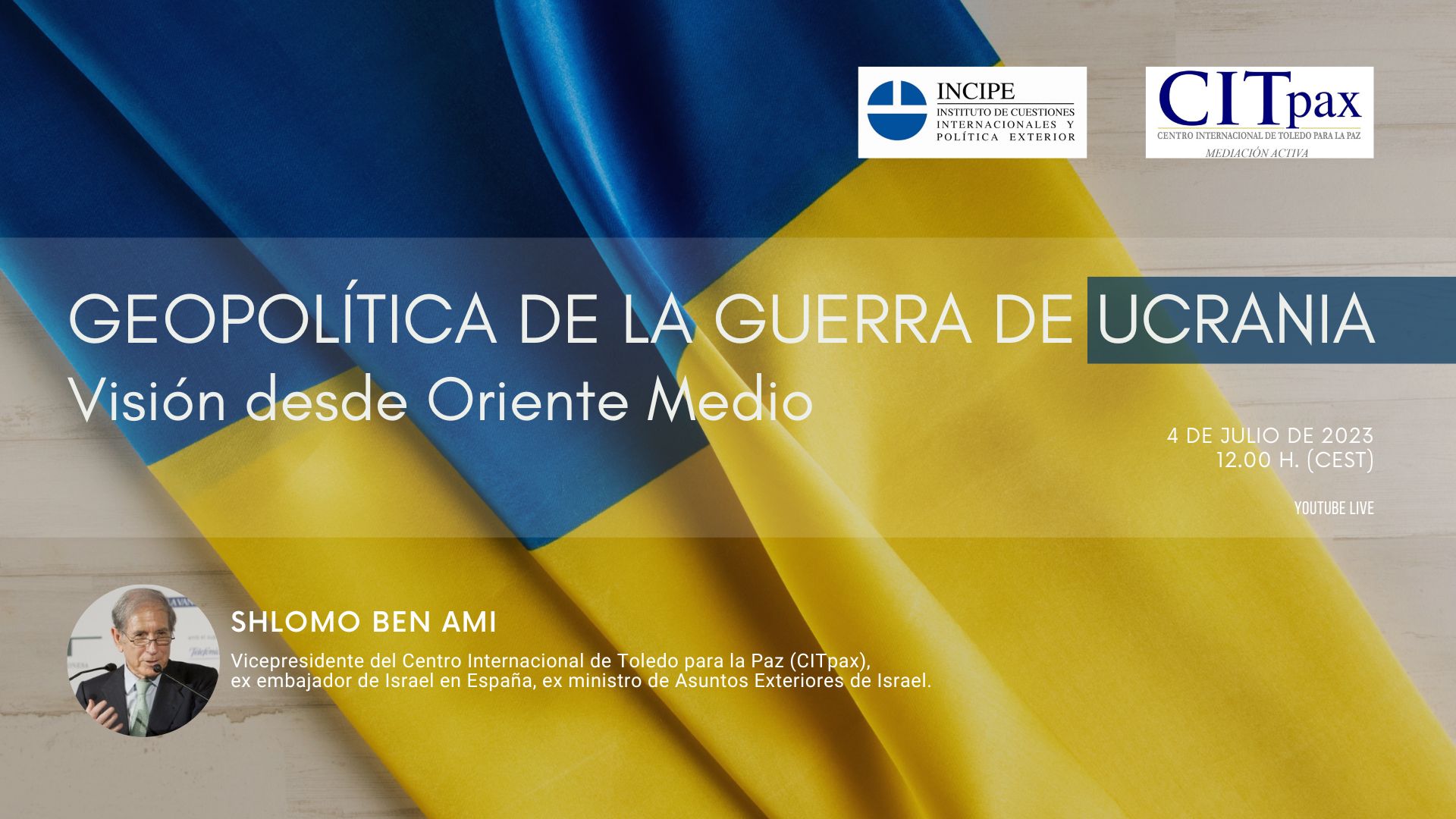
Shlomo Ben Ami began his presentation by explaining the current geopolitical landscape in the Middle East and how the region is becoming accustomed to acting as if the United States had withdrawn from the area. This is due to the fact that the U.S. is reassessing its strategic priorities and focusing on Ukraine and China.
There is currently a sense that the main powers in the region oscillate between the U.S. and other global powers, Ben Ami noted, which is evident in the fact that these countries did not participate in the sanctions against Russia. This shift is influenced by changes in oil geopolitics, as the U.S. no longer relies on Middle Eastern oil, given that it is now the world’s largest oil producer. For this reason, Ben Ami explained, Iran is reemerging on the region’s political scene, alongside other countries, leaving Israel as the only one failing to develop regional diplomacy.
He also pointed out that Israel is currently facing chaos and misgovernance in the West Bank, while Iran has become a legitimate state actor in the region. This puts Israel in a difficult position, as it faces conflicts on multiple fronts simultaneously. In addition to the conflicts in the West Bank and Gaza, a direct confrontation with Hezbollah, initiated by Iran, could also arise—creating a devastating scenario.
Regarding the war in Ukraine, Ben Ami highlighted that Israel’s advanced missile defense technology has turned the war into an economic boon for the Israeli military industry, given the ongoing rearmament in Europe. Furthermore, he noted that Russia has lost interest in Syria, which has effectively become an Iranian stronghold, as Russia’s efforts remain focused on Ukraine.
As for the future of the war in Ukraine, he suggested that it could result in a prolonged stalemate and a guerrilla war in the occupied Ukrainian territories. He also stated that it is unrealistic to believe that Ukraine can fully reclaim its occupied territory, including Crimea. Additionally, he pointed out that a change in government in Russia is unlikely, as Putin is protected by military and political elites. However, even in the event of a Russian collapse, the country’s disintegration could be extremely dangerous, as it would entail the loss of control over the world’s largest stockpile of nuclear weapons.
At the end of the session, a discussion took place in which participants raised questions on topics such as Israel’s ambiguous stance on both Ukraine and China, and how this represents a risky position in foreign policy. The Israeli-Palestinian conflict was also discussed, with Ben Ami arguing that territorial disputes are not the most significant factor in the conflict. Rather, it revolves around intangible narratives that are difficult to resolve. The role of Chinese mediation in the conflict was also debated. Finally, there was discussion about how the U.S.’s current non-hegemonic presence in the Middle East has forced countries in the region to seek their own internal balances.