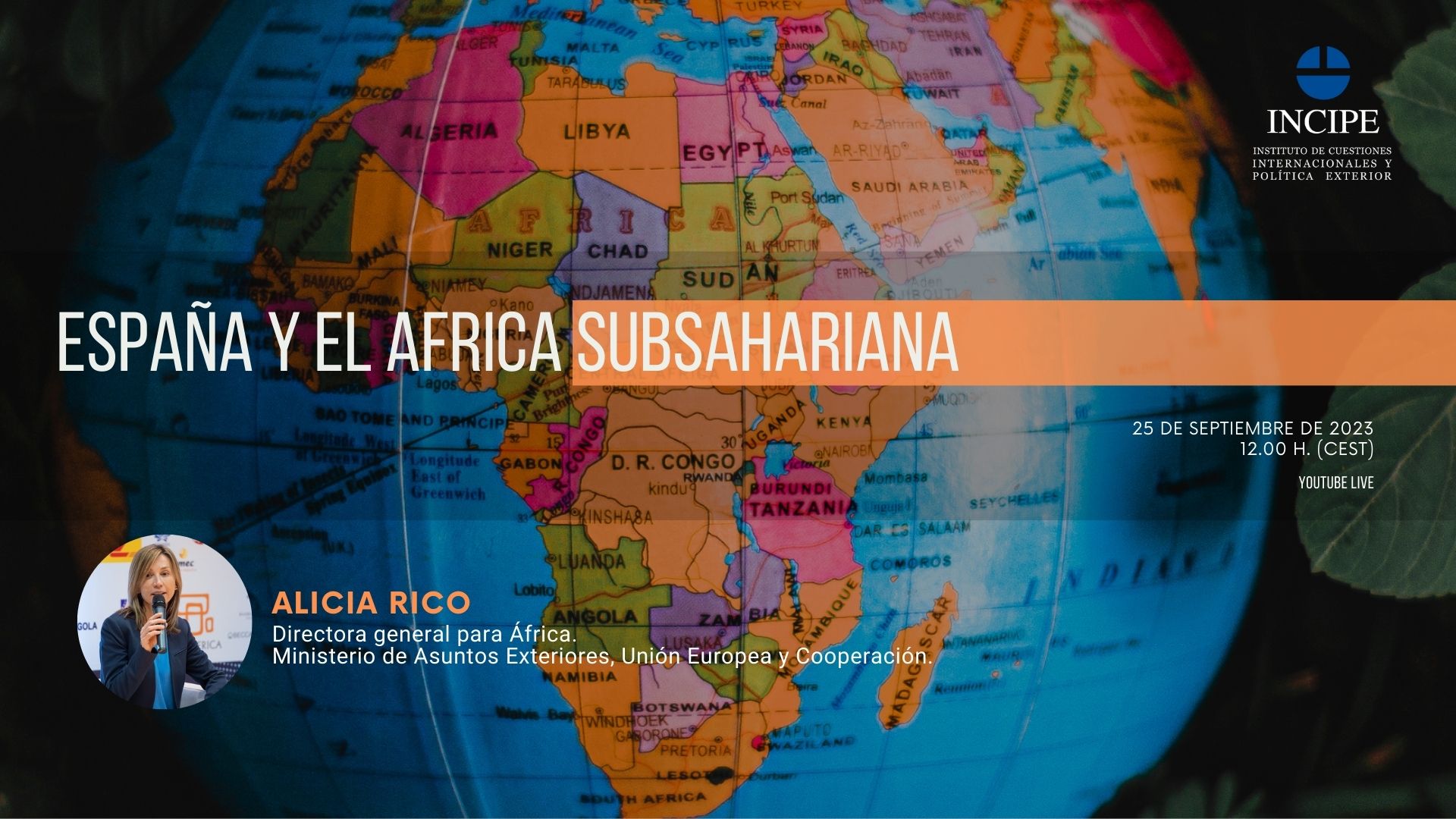
Alicia Rico began by explaining that we are at a critical moment in Sub-Saharan Africa, but at the same time, it is a region that is gaining increasing importance, both for our foreign policy and on the global stage. She then highlighted that the region is being affected by a series of crises, including economic, climate, and governance crises; however, at the same time, Africa as a whole has never had a stronger and clearer voice in the international arena. She also emphasized that the Global South, as a whole, is calling for a reform of the global governance system and the international financial architecture.
The III Africa Plan, implemented by the Ministry of Foreign Affairs, represented a paradigm shift, also within the European Union, by moving away from viewing Sub-Saharan Africa merely as a recipient of development aid and instead recognizing the great opportunities it offers. Additionally, the European Green Deal agenda highlights the continent’s importance when discussing critical minerals for renewable energies and the development of the technology industry.
To help ensure that efforts toward economic growth and sustainable development move in the right direction, Spain, Alicia Rico stressed, has set four strategic objectives in the region: peace and security, sustainable development alongside stable economic growth, institutional strengthening, and orderly and secure mobility. As a result, Rico explained, Spain has significantly contributed to the United Nations Sustainable Development Goals Fund, while also driving the reform of international development banks and the democratization of international financial institutions.
Africa is under significant demographic pressure and requires a structural transformation of its economy, which is why support for the continent’s industrialization is crucial. In this regard, Spain, under the framework of the Spanish Presidency of the Council of the European Union, will organize a high-level meeting with the African Union focused on transformative investments aimed at job creation.
Additionally, the Ministry of Industry, Tourism, and Trade approved the Horizon Africa strategy, which includes financial instruments to support Spanish business projects in the region. At the European Union level, another key instrument is the Global Gateway investment package, which is essential for the energy transition and digital transformation of Sub-Saharan Africa.
On the other hand, over the past decade, the phenomenon of terrorism has worsened and spread across the continent. This situation is particularly evident in the Sahel region, where attacks have increased by 500% since 2015. Rico stated that this is one of the main factors behind the governance crisis unfolding in the region, with eight coups d’état since 2020. She stressed the need to strengthen true democratic governance and reliable economic governance. One of the biggest challenges in Sub-Saharan Africa, she pointed out, is the lack of inclusive growth and wealth distribution.
Regarding the climate crisis, Rico highlighted the African Climate Summit, held in Nairobi this past September, where, for the first time, Africa sought to present a unified voice on this issue. She also reminded that we must not forget that African countries are essential for achieving our own green agenda.
At the end of the session, a debate took place in which participants posed questions on topics such as the orderly withdrawal of French soldiers from Niger and Spain’s significant strategic interest in stabilizing this region. The discussion also addressed the relationship between poverty and migration, primarily due to the lack of opportunities for young Africans, and the need for a comprehensive approach to tackle the root causes. Additionally, there was a discussion on African markets as an opportunity and how Spanish companies are leveraging them.
Elena Ferro