
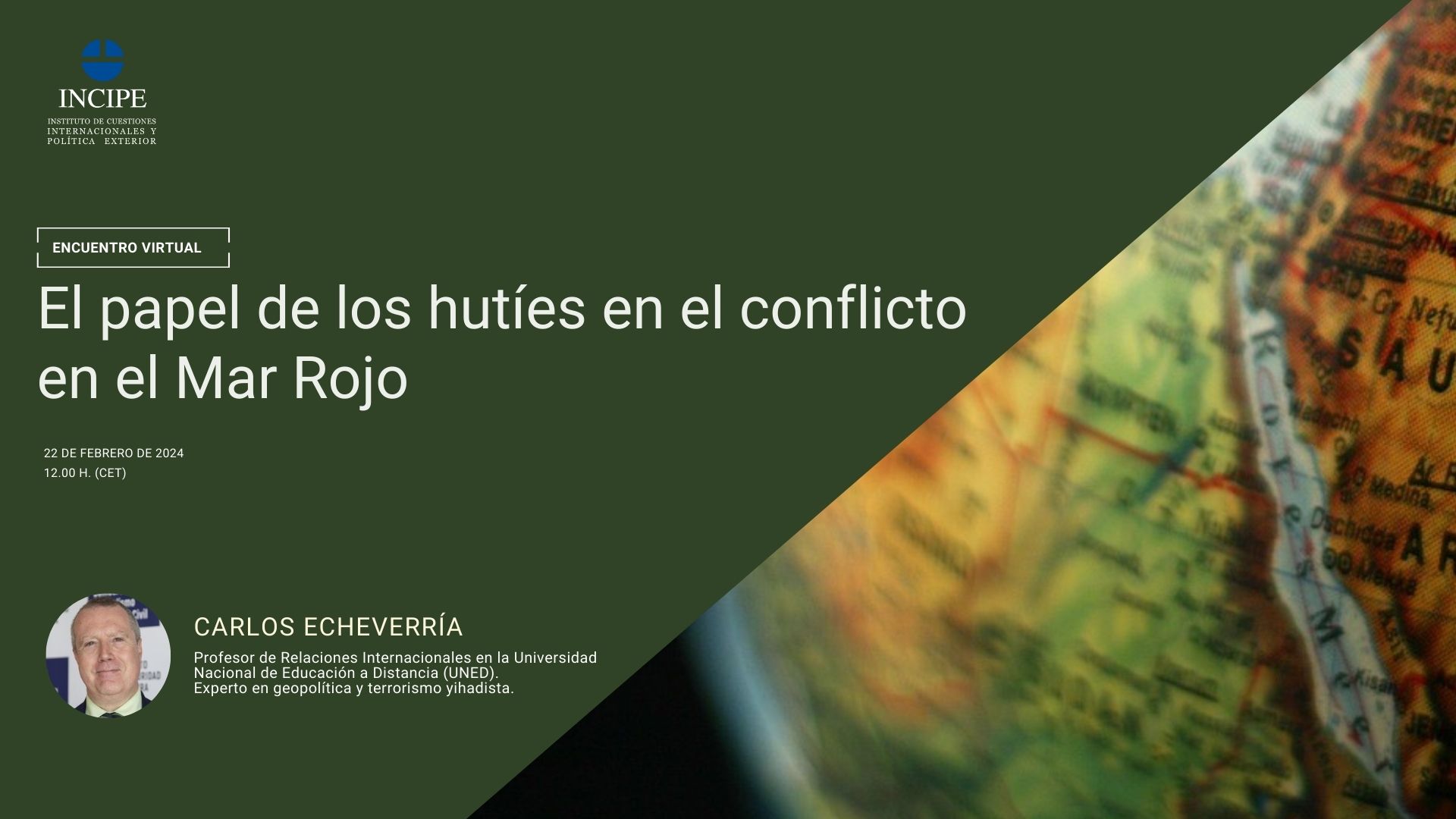
arlos Echeverría began his presentation by emphasizing the open and dynamic nature of the Yemeni conflict. He provided historical context, tracing the conflict back a decade and highlighting the crucial role of the Houthis, a key group in the civil war. He described the Houthis, also known as Ansar Allah, as a movement founded by Badreddin al-Houthi, identifying with the Zaydi branch of Shiism, and acting as a proxy for the Islamic Republic of Iran in the region.
Echeverría detailed how the conflict has led to destabilizing consequences both internally and regionally, exacerbating intercommunal tensions and affecting security in Yemen and neighboring countries such as Saudi Arabia and the United Arab Emirates.
Additionally, he examined the role of other regional and international actors, such as Hezbollah, Hamas, and the Iraqi Popular Mobilization Forces, in the Yemeni conflict. He highlighted the Houthis’ growing military and political power and their connection with Iran, evidenced by their sophisticated arsenal, including drones and ballistic missiles.
Echeverría provided an in-depth analysis of the attacks carried out by the Houthis against targets in Saudi Arabia, the UAE, and Israel, explaining how these incidents have contributed to escalating tensions in the region. He also discussed the economic and psychological impact of these attacks, as well as the military and diplomatic responses from affected countries. Furthermore, he explored international efforts to address the Yemeni crisis, including peace negotiations and mediation attempts between conflicting parties. However, he underscored that the conflict persists and continues to pose a significant threat to regional and global stability.
At the end of the session, a discussion took place in which participants raised questions about topics such as the classification of the Houthis, the context of Yemen’s civil war, and the possibility of South Yemen’s independence. There was also discussion on the missions carried out in the Red Sea to ensure safe navigation, the interplay between the Red Sea conflict and the war in Sudan, and the potential increase in tensions between Ethiopia and Somalia. Additionally, participants addressed Iran’s involvement, the role of Arab states, and, finally, Spain’s position on the conflict.
Elena Ferro