
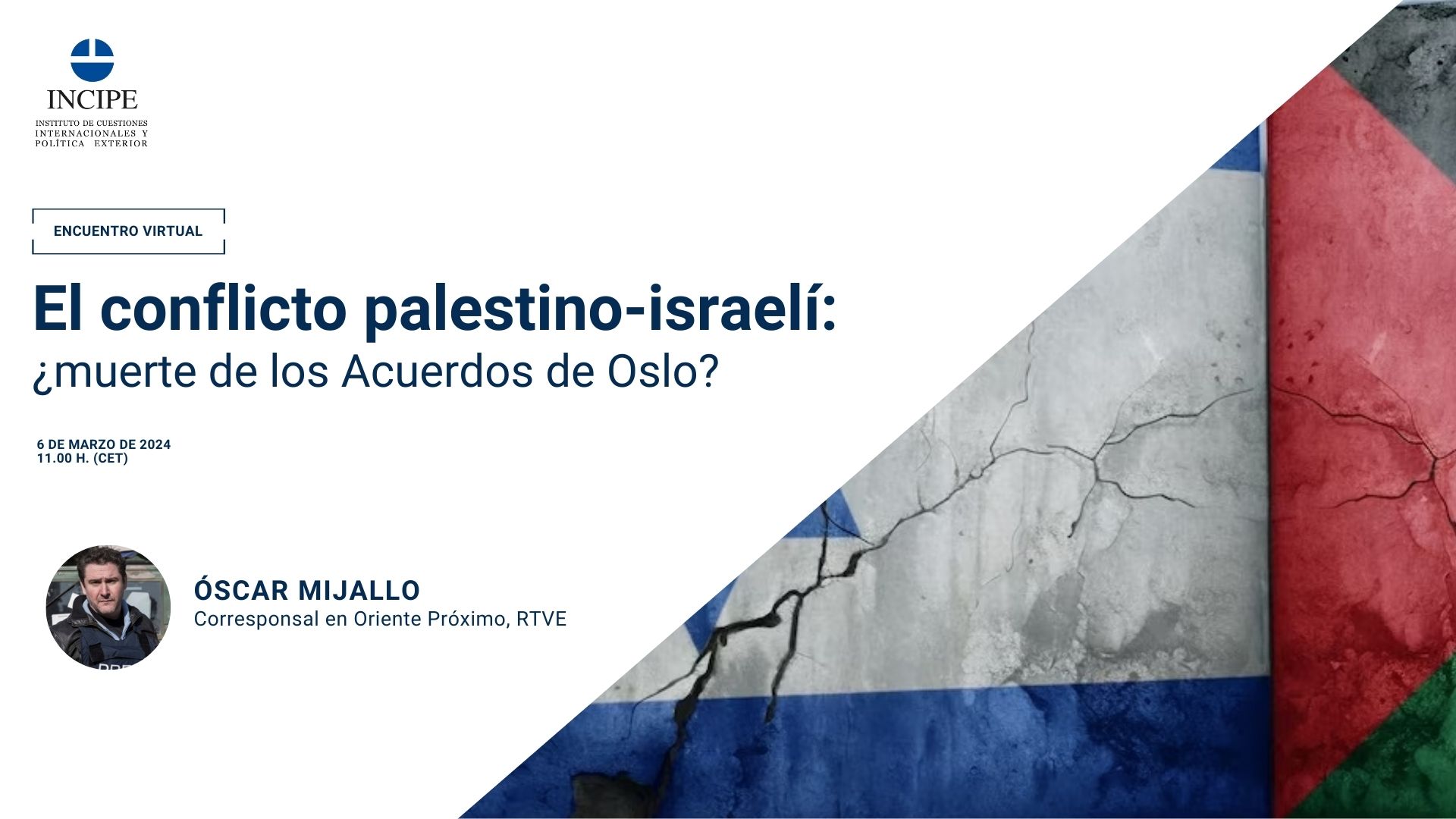
Óscar Mijallo began his speech by explaining why today’s session was titled Israeli-Palestinian conflict rather than Arab-Israeli conflict, despite the significant role of religion in the issue. However, the speaker emphasized the need to highlight the national dimension of the conflict, given that Hamas, in its founding charter, refers to itself as “Arab Palestinians.” After stressing this point, Mijallo proceeded to explain the key elements of the ongoing conflict in Gaza, starting with the Oslo Accords. Without delving into the specifics of these agreements, he referenced them to illustrate their ineffectiveness, highlighting the obvious fact that a Palestinian state has yet to be established—a goal that seems increasingly distant.
The speaker also discussed the reasons behind the Israeli government’s actions and the potential internal consequences of the conflict. In this regard, he mentioned the punitive mindset of Israeli society, assuming that Netanyahu’s government will not remain unscathed as a result of the war. He also pointed to a notable decline in international support for Israel, particularly among countries that had previously backed it. The destruction of hospitals in Gaza, along with other similar actions, appears to be a turning point. Nonetheless, Mijallo explained how the conflict is impacting other states, specifically mentioning Muslim-majority countries and how they have been compelled to respond.
Additionally, Mijallo addressed the challenges Hamas is facing, with a particular focus on the geographical aspect, as the Gaza Strip is encircled not only by Israel but also by Egypt.
At the end of the session, a debate took place in which participants asked questions about the position of the United States and the potential shift in its foreign policy following the November 2024 presidential elections. Questions were also raised regarding regional governance, Israel’s relations with other Arab countries, and the European Union’s muted stance on the attacks in Gaza.
María Archilla