
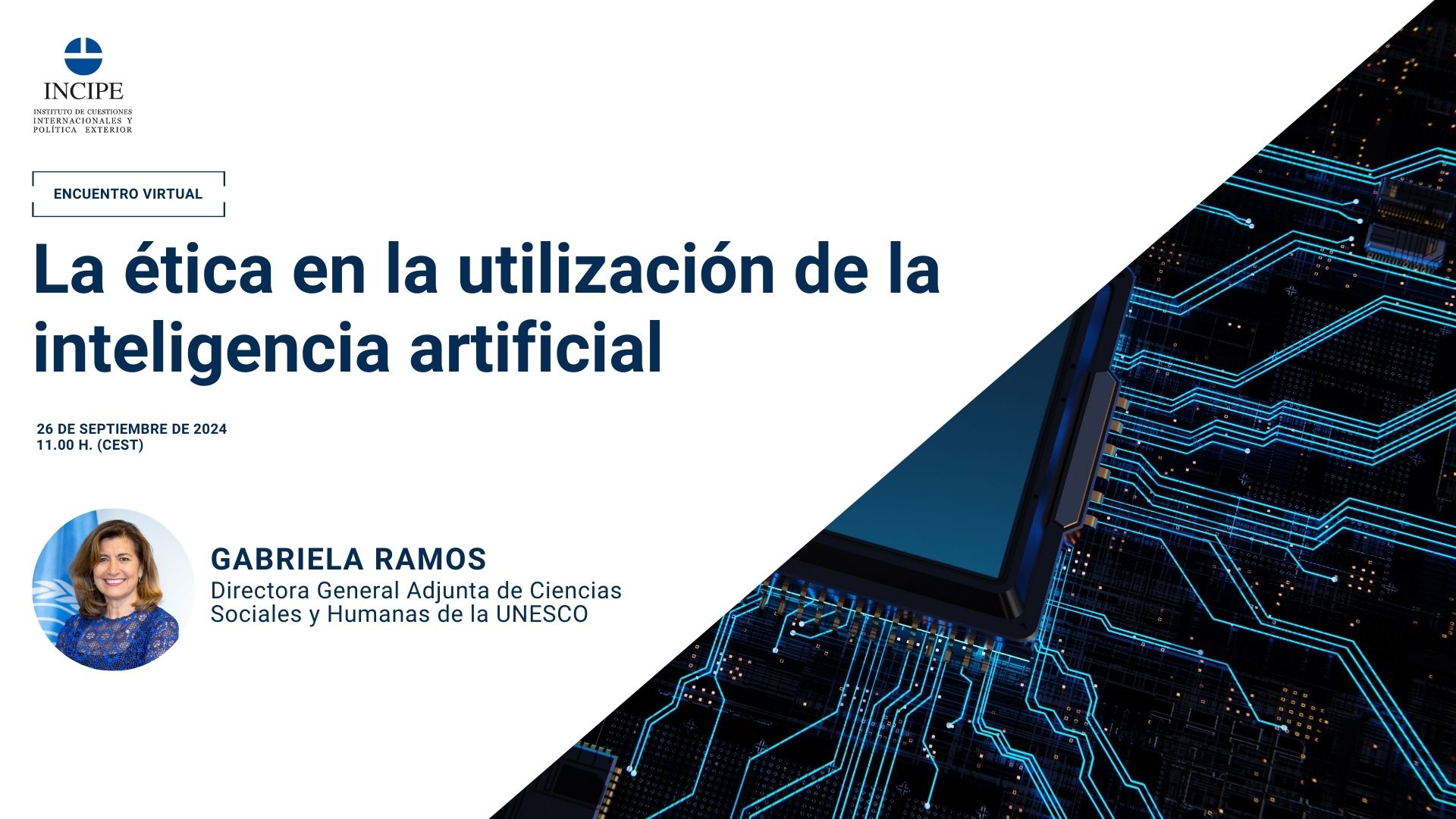
Gabriela Ramos emphasizes that one of the key factors to understanding the impact of AI is its record speed of adoption. The unprecedented progress in its development is supported by multimillion-dollar investments that not all companies can afford, meaning the competitive capacity to amplify these tools is concentrated in a limited number of financially powerful companies. Ramos also highlights that adopting AI in sophisticated processes requires not only investment but may also require enhancing the competencies of the companies that want to use this tool. This is why, currently, many small and medium-sized enterprises are unable to fully utilize AI.
Although risks such as cybersecurity, misuse, and disinformation are highlighted as the major concerns generated by the development of this technology, Gabriela Ramos points out other risks that receive less attention. For example, the daily use of AI-generated results to support decisions at government, academic, or private levels could threaten social coexistence by opening the door to stripping social rights from parts of the population based on biased or unbalanced algorithms. Another significant challenge arises at the gender level, with AI generating a technological gap between men and women by amplifying stereotypes, creating gender-based algorithmic biases, or creating barriers for women’s entrepreneurship in relation to this technology.
These challenges stemming from AI development are confronted with narratives that have hindered further progress in its regulation, such as the idea that regulation stifles innovation or that AI-related issues are too complex and should only be handled by specialized personnel. Despite this, Gabriela Ramos acknowledges increased awareness by governments regarding the need to develop much stronger regulatory frameworks. Ramos points out the rise in the number of bills in many countries (from 1 in 2016 to 37 in 2022), as well as global legislative procedures related to AI (6.5% more since 2016). This is a significant step forward, although many of these legislations focus on the practical application of AI in specific sectors, rather than on its general algorithmic regulation.
Ramos also highlights UNESCO’s role as the first international organization to achieve the signing of a resolution on AI ethics by 193 countries. This resolution was driven by an international group of experts from various fields (mathematicians, philosophers, historians, economists, etc.), which emphasizes the multidisciplinary nature of regulation as well as its focus on human-centered content. Thus, the resolution does not focus on technology itself but on what the objective and impact of this technology should be. This involves a thorough definition of the values the technology should adhere to, which can be extrapolated into practical principles that developers, governments, and users must consider when interacting with AI, such as the proportionality of its use, the guarantee of security and user protection, and the right to privacy and data protection. These values can, in turn, be translated into very specific recommendations at the public policy level.
Gabriela Ramos highlights the fundamental role of regional and global forums on AI ethics, which allow for the sharing of experiences on this matter, even at the private sector level or focusing on specific areas such as gender. Finally, she concludes by mentioning the global digital pact promoted by the UN, which takes the narrative a step further to ensure that AI is robust and inclusive, and that countries lagging in its adoption are receiving the support they need. According to Ramos, AI can be a fundamental tool to achieve the SDGs, so the issue is not just its regulation but also the investment support to ensure developments in AI are solid and accessible.
The session concluded with a debate in which participants were able to ask questions about the topics discussed. This exchange underscored the importance of better understanding the international framework when addressing the ethical challenges arising from AI development.
Lucía Rodríguez